

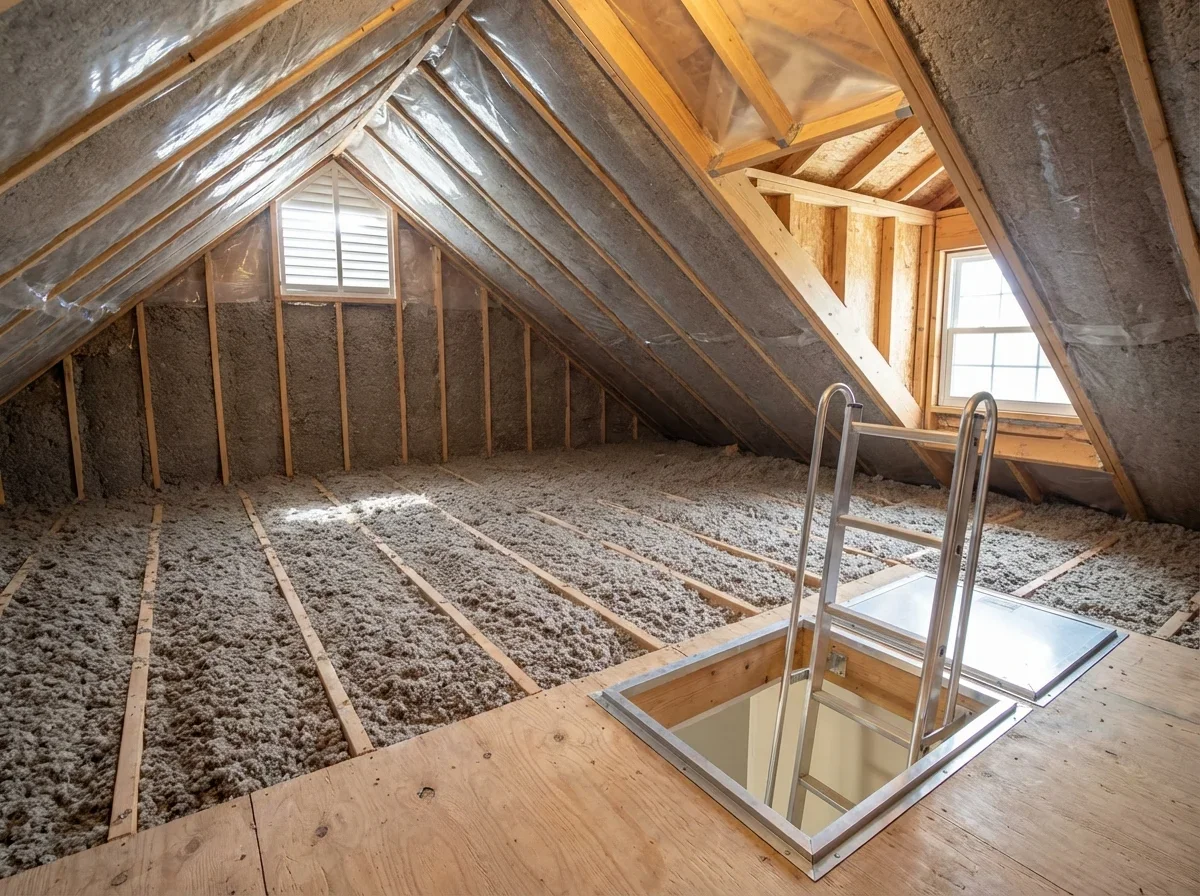
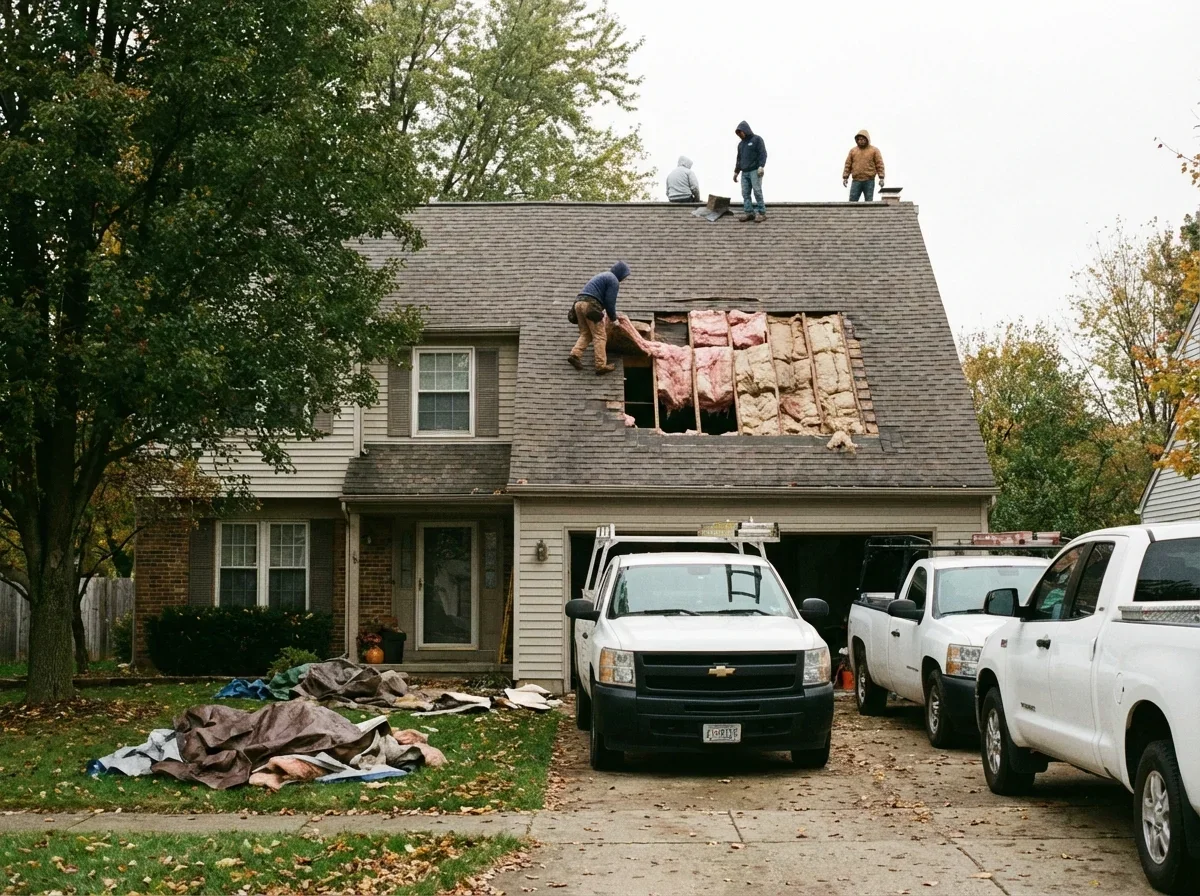
Proper attic insulation is critical for Ohio homes, reducing heating costs in winter, cooling expenses in summer, and preventing ice dam formation. Upgrading to modern insulation materials and achieving proper R-values can cut energy bills by 20-30% while extending your roof's lifespan. Our insulation experts assess your current levels and install blown-in, batt, or spray foam insulation to meet Ohio building codes and maximize comfort.
Featured Contractors
View all →




When Do You Need an Attic Insulation Upgrade?
Your attic insulation degrades over time. Fiberglass settles and compresses. Rodents tunnel through it. Roof leaks compress and contaminate it. What started as R-38 can drop to R-15 after fifteen years.
Watch for these warning signs:
- Ice dams forming along your roofline during freeze-thaw cycles
- Energy bills climbing even though usage hasn't changed
- Second-floor rooms noticeably hotter in summer, colder in winter
- Visible insulation gaps when you look into the attic
- Musty odors or signs of moisture in the attic space
In Ohio's climate, inadequate attic insulation creates a winter chain reaction. Heat escapes through the attic, melts snow on the roof, water refreezes at the eaves — ice dams form. Those ice dams force water under shingles, damaging both roof and interior. Homeowners in Columbus and Cleveland report ice dam damage every winter when attic insulation falls below R-30.
The math is simple. Heat rises. An under-insulated attic in Toledo can lose 25-40% of your home's heat straight through the roof deck. That's not a comfort problem — it's throwing cash into the winter air.
Your HVAC system runs constantly trying to compensate. The furnace cycles on every 8 minutes instead of every 20. Summer air conditioning struggles to keep up with superheated attic air radiating down through ceilings. The equipment wears out faster.
What Does Attic Insulation Cost in Ohio?
Pricing depends on material choice, target R-value, attic square footage, and whether old insulation needs removal. Here's what contractors charge in the Ohio market:
Cost by Material Type
| Insulation Type | Installed Cost per Sq Ft | R-Value per Inch | Best Application |
|---|---|---|---|
| Blown-in cellulose | $1.50 - $2.50 | R-3.5 | Standard attics, existing insulation top-up |
| Blown fiberglass | $1.75 - $2.75 | R-2.5 | Clean attics, allergy concerns |
| Fiberglass batts | $1.25 - $2.00 | R-3.0 - R-3.8 | Easy-access attics, DIY-friendly |
| Spray foam (open-cell) | $2.50 - $3.50 | R-3.5 | Air sealing + insulation combined |
For a typical 1,200 square foot attic in Dayton, expect $1,800-$3,600 for blown cellulose to R-49, or $3,000-$4,200 for spray foam. Cathedral ceilings and finished attic spaces cost 30-50% more due to access difficulty.
Factors That Affect Price
Square footage and access — larger attics cost more, but price per square foot drops. Difficult access (small hatches, low-pitch roofs) adds labor time.
Target R-value — Ohio energy code requires minimum R-38 for attics. Most contractors recommend R-49 to R-60 for meaningful energy savings. Higher R-values mean more material depth and higher cost.
Old insulation removal — adds $1-$2 per square foot. Necessary when existing insulation is contaminated, wet, or severely compressed.
Air sealing scope — basic sealing (attic hatch, a few penetrations) usually included. Extensive sealing (multiple chimneys, recessed lights, complex ductwork) adds $300-$800.
Ventilation upgrades — if your attic lacks proper soffit or ridge venting, addressing this adds $500-$1,500 but prevents future moisture problems.
Energy savings typically run $400-$900 annually in heating and cooling costs for homes upgrading from R-19 to R-49. Payback period: 4-7 years. Property appraisers recognize proper attic insulation — it's a selling point that shows the home was maintained correctly.
The Attic Insulation Installation Process
Professional attic insulation isn't about dumping material between joists. The work follows a specific sequence — skip steps and you waste money on insulation that underperforms.
Inspection and Air Sealing
The crew starts with a thorough attic inspection. They're looking for air leaks: recessed light fixtures, attic hatch gaps, plumbing and electrical penetrations, top plates where walls meet the ceiling. Air sealing comes before insulation. Insulation slows heat transfer; air sealing stops air leakage. Both matter. Spray foam or caulk seals penetrations. Weatherstripping goes around the attic access door.
Old Insulation Removal (When Needed)
Contaminated, compressed, or wet insulation gets removed. If rodents nested in it, it goes. If a roof leak soaked it, it goes. Moldy insulation cannot dry properly — removal prevents ongoing moisture and air quality issues. Removal adds $1-2 per square foot to project cost but solves underlying problems.
Installation and Ventilation Check
- Material delivery — blown insulation arrives in bags, batts come in rolls, spray foam in tanks
- Application — blown-in cellulose or fiberglass sprays evenly across the attic floor to target depth; batts get cut and fitted carefully around obstructions; spray foam expands into cavities
- Depth verification — crews use rulers to confirm consistent depth (14-16 inches for R-49, 18-20 inches for R-60)
- Ventilation balance — soffit vents and ridge vents must remain clear; baffles keep insulation from blocking airflow
Most attic insulation jobs in Cincinnati or Akron complete in one day for typical ranch or colonial homes. Larger homes or spray foam applications extend to 2-3 days. The work creates dust — seal off living spaces below.
How to Choose an Attic Insulation Contractor
Not all insulation contractors understand the roof-insulation-ventilation system. Roofers who also handle insulation often deliver better results because they know how the pieces interact.
Questions to ask:
- What R-value do you recommend for my home, and why? (Should reference Ohio climate zone, not just code minimum)
- How do you handle air sealing before insulation? (Should be standard, not optional)
- Do you verify ventilation adequacy before installation? (Soffit and ridge vents must stay clear)
- What equipment do you use for blown-in installation? (Professional blowers ensure consistent density)
- Is old insulation removal included, or priced separately?
- What warranty covers the installation work and material performance?
Red flags that signal problems:
- Quotes significantly below market rates — likely insufficient depth or skipped air sealing
- No mention of ventilation or air sealing in the scope of work
- Pressure to choose spray foam without discussing cost-effective alternatives
- Cannot provide current insurance certificate or references from jobs in Canton or Parma
Ohio contractors performing insulation work should carry general liability insurance and workers' compensation. Many hold certifications from insulation manufacturers (CertainTeed, Owens Corning) confirming installation training.
Compare at least three detailed quotes. The cheapest rarely delivers the best value — you're looking for appropriate R-value, proper air sealing, and ventilation consideration. A quality installation from a contractor who understands Ohio's freeze-thaw cycles prevents ice dams and delivers the energy savings you're paying for.
Frequently Asked Questions
Related Articles
Need Help With Your Project?
Join 500+ homeowners we've helped