
Built-up roofing (BUR) systems provide time-tested protection for low-slope commercial buildings across Ohio with multiple layers of bitumen and reinforcing fabrics. These durable roofs handle ponding water, heavy foot traffic, and HVAC equipment loading while offering excellent fire resistance. Our commercial roofing specialists install and maintain BUR systems that deliver decades of reliable performance for Ohio businesses.
Featured Contractors
View all →



What Is Built-Up Roofing?
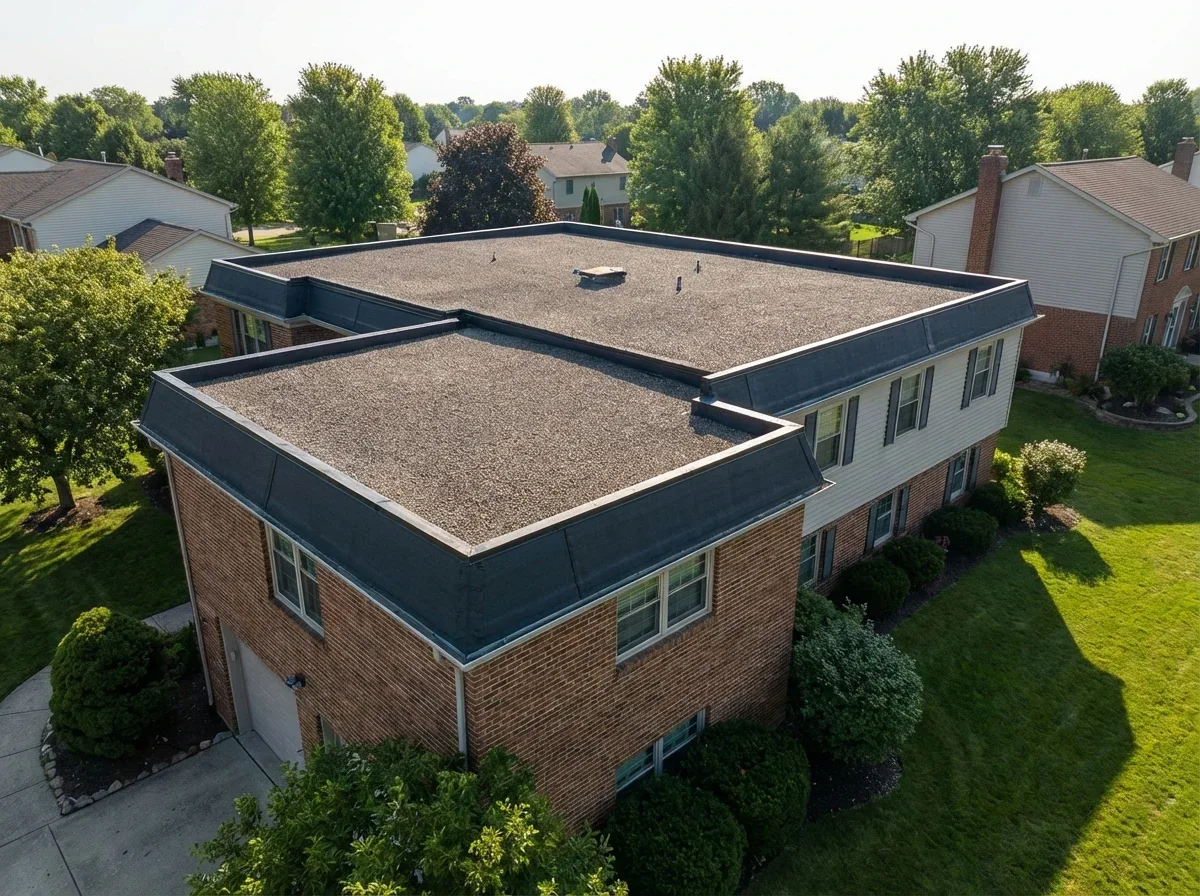
Built-up roofing (BUR) consists of alternating layers of bitumen (asphalt or coal tar) and reinforcing fabrics (felt or fiberglass). Roofers build the system on-site, typically topping it with gravel or a mineral cap sheet. You'll recognize it as "tar and gravel roofing" on countless older commercial buildings across Columbus, Cleveland, and Cincinnati.
The layered construction creates redundancy. If one layer develops a weak spot, the layers below still protect your building. This makes BUR exceptionally durable for high-traffic applications — rooftop HVAC maintenance, loading dock access, or utility work that would puncture thinner membranes.
How BUR Systems Work
Each layer serves a specific purpose. Base sheets attach to the roof deck. Ply sheets (the main waterproofing layers) alternate with hot bitumen or cold adhesive. A final flood coat of bitumen holds the gravel surfacing or bonds the cap sheet.
More plies mean longer life. A 3-ply system might last 15-20 years. A 5-ply system can exceed 30 years in Ohio's climate when maintained properly.
The ply count determines durability. Each additional layer adds approximately 5 years to the expected lifespan while increasing material and labor costs proportionally.
Ply Configurations and Materials
Standard configurations:
- 3-ply: Base sheet + 2 plies + surfacing (budget option, 15-20 years)
- 4-ply: Base sheet + 3 plies + surfacing (standard commercial, 20-25 years)
- 5-ply: Base sheet + 4 plies + surfacing (premium, 25-30+ years)
Bitumen choice matters in Ohio. Asphalt-based systems handle temperature extremes well. Coal tar systems offer superior waterproofing for roofs with persistent ponding issues.
What Does Built-Up Roofing Cost in Ohio?
BUR installation in Ohio runs $4.00-$7.00 per square foot for complete tear-off and replacement. A 10,000 sqft warehouse roof in Toledo or Dayton costs $40,000-$70,000 installed. Pricing depends on ply count, installation method, and roof accessibility.
| System Configuration | Cost Per Sqft | 10,000 Sqft Building |
|---|---|---|
| 3-ply hot-mopped with gravel | $4.00-$5.00 | $40,000-$50,000 |
| 4-ply hot-mopped with gravel | $5.00-$6.00 | $50,000-$60,000 |
| 5-ply hot-mopped with gravel | $6.00-$7.00 | $60,000-$70,000 |
| Cold-applied 4-ply system | $5.50-$6.75 | $55,000-$67,500 |
Cost Breakdown by Ply Count
Each additional ply adds approximately $0.75-$1.00/sqft in combined material and labor costs. The extra layers require more bitumen, more reinforcement sheets, and more installation time. For buildings you plan to own 20+ years, the investment pays off in extended service life.
Installation Method Cost Differences
Hot-mopped systems cost less upfront but require weather cooperation. Cold-applied systems run 10-15% higher but offer scheduling flexibility — crucial for retail locations in Canton or Parma that can't shut down for weather delays.
Gravel surfacing adds $0.40-$0.60/sqft versus smooth cap sheets. The trade-off: gravel provides superior protection but complicates maintenance access.
Factors That Affect Your Total Price
Roof complexity: Simple rectangular roofs cost less. Multiple penetrations (HVAC units, vents, drains) increase labor 15-25%.
Accessibility: Ground-level roofs with crane access install faster. High-rise buildings require material hoisting and staging, adding $1-2/sqft.
Insulation upgrades: Most reroofs include new insulation. Budget $1.50-$3.00/sqft for polyiso or EPS insulation board to meet current energy codes.
Deck repairs: Damaged plywood or concrete deck sections need replacement before roofing begins. This discovery work adds costs that won't appear in initial estimates.
Disposal: Removing and hauling old BUR typically costs $1.00-$2.00/sqft depending on landfill distance and gravel weight.
The Built-Up Roofing Installation Process
BUR installation requires specialized equipment and training. The process typically takes 3-7 days depending on roof size and complexity. Most Ohio contractors schedule installations during dry weather between May and October to ensure proper adhesion.
Roof Inspection and Preparation
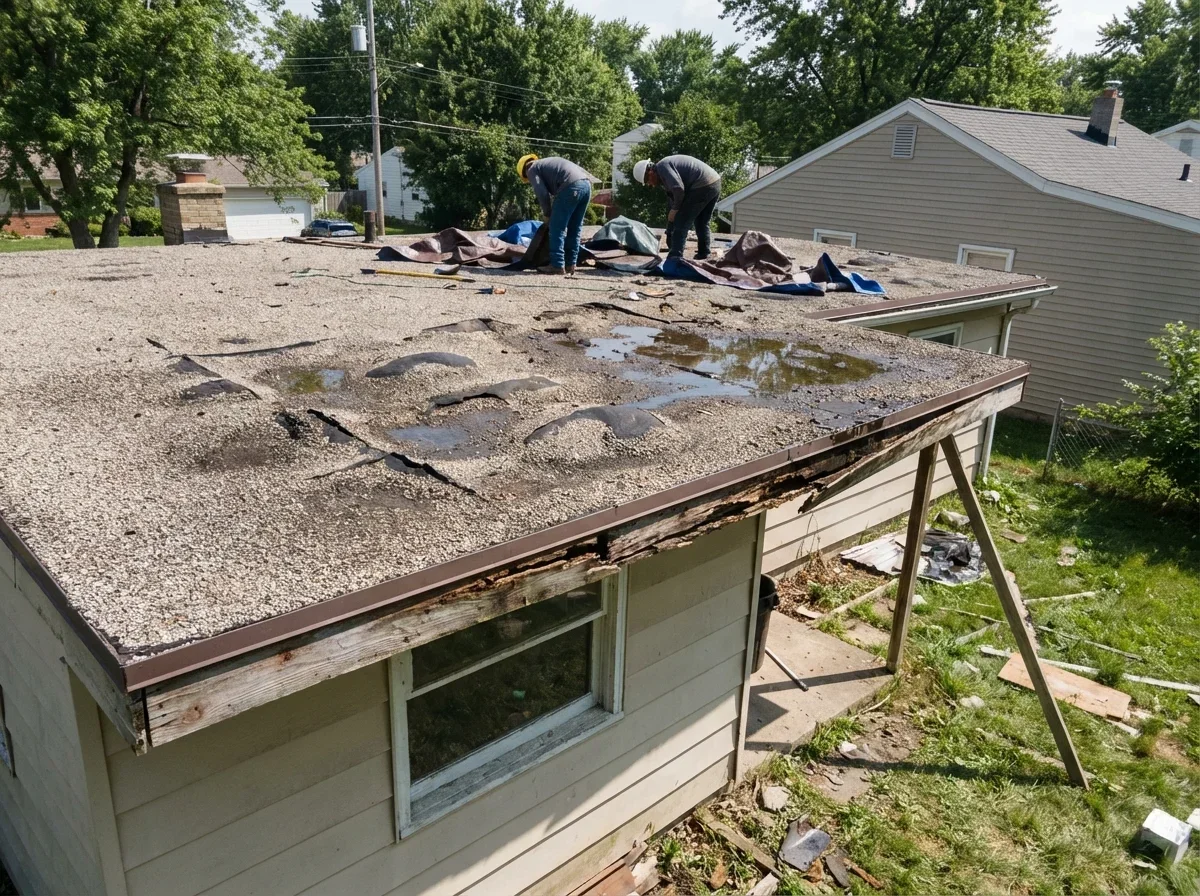
Contractors inspect the existing roof deck for damage, moisture, and structural integrity. They verify that deck fasteners are secure and flush — protruding screws will telegraph through the new membrane. The deck must be dry; moisture trapped beneath BUR creates blisters that compromise the system.
For reroofs, crews remove the old roofing down to the deck. In Akron and Youngstown manufacturing facilities, this often means disposing of decades-old gravel and saturated insulation. Proper disposal adds 1-2 days and $1-2/sqft to the project.
Hot-Mopping or Cold Application
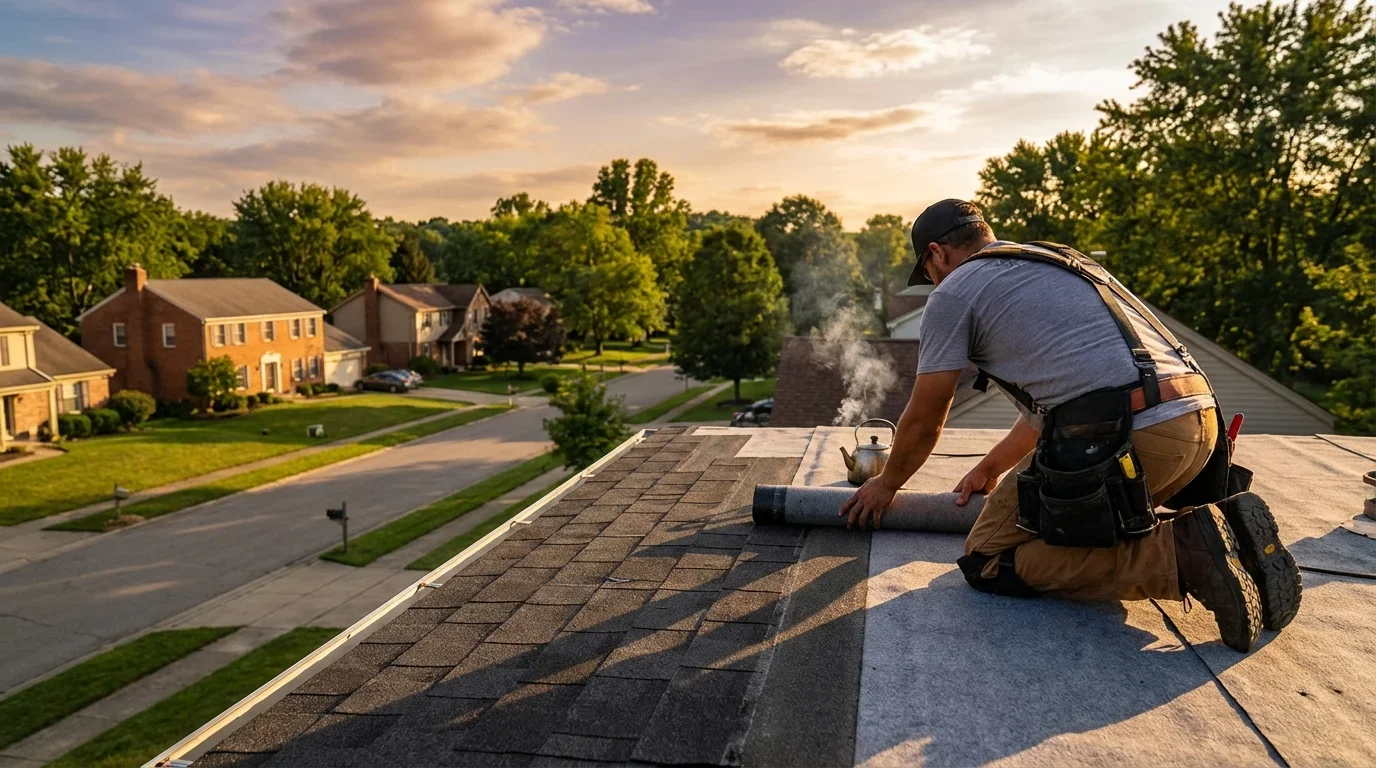
Hot-mopped systems remain the standard for BUR. Crews heat bitumen in a kettle to 400-500°F, then mop it onto the roof. Roofers embed reinforcing sheets in the hot bitumen, overlapping edges by 2-6 inches. The process repeats for each ply.
Hot work requires permits and safety protocols — open flames on rooftops demand careful management near HVAC units, parapet walls, and adjacent structures.
Cold-applied systems use adhesives instead of heated bitumen. They eliminate fire risk and strong odors, making them suitable for occupied buildings or locations with hot work restrictions. Cold application costs 10-15% more but works year-round in Ohio.
Gravel Surfacing and Finishing
The final flood coat of bitumen receives surfacing within minutes of application:
Gravel surfacing (400+ lbs per square): Protects bitumen from UV degradation and impact damage. Gravel roofs last longer but complicate leak detection and prevent solar panel installation. Plan for periodic gravel redistribution — wind and foot traffic concentrate stones over time.
Smooth cap sheet: Mineral-surfaced roll roofing bonded to the flood coat. Easier to inspect and maintain. Required if you're considering rooftop solar arrays. Needs recoating every 10-15 years in Ohio's climate.
How to Choose a Built-Up Roofing Contractor
BUR installation requires specialized knowledge and equipment that separates qualified commercial roofers from residential crews. Ohio contractors need specific experience with hot work permits, bitumen handling, and multi-ply system construction.
Experience with Commercial BUR Systems
Questions to ask:
- How many BUR projects have you completed in the past 24 months?
- Can you provide references from similar building types (warehouse, retail, manufacturing)?
- What ply configuration do you recommend for my roof traffic and budget?
- Do you offer both hot-mopped and cold-applied installation?
- How do you handle ponding water areas during installation?
- What's your plan for protecting occupied spaces from bitumen odors?
Request photos of completed projects showing gravel distribution, flashing details, and penetration seals. Sloppy gravel application or inadequate flashing reveals lack of attention to detail.
Equipment and Safety Standards
Verify the contractor owns or leases professional bitumen kettles with temperature controls. Overheated bitumen degrades prematurely; underheated bitumen doesn't bond properly. Proper equipment matters for system longevity.
Confirm they carry:
- Commercial general liability insurance ($2M+ for most Ohio projects)
- Workers' compensation covering all crew members
- Hot work insurance and permits (required for mopping operations)
Check Ohio licensing requirements for commercial roofing contractors in your county. Some municipalities require additional permits for hot work near occupied spaces.
Warranty Coverage and Maintenance Plans
Standard BUR warranties cover 10-20 years on materials and 2-5 years on workmanship. Manufacturer warranties require certified installers — verify your contractor's certifications before signing.
Ask about maintenance programs:
- Semi-annual inspections (spring and fall recommended in Ohio)
- Drain clearing and gravel redistribution
- Recoating schedules for smooth-surface systems
- Emergency leak response protocols
Red flags:
- Pressure to choose the cheapest ply count without discussing your building's use
- Unwillingness to provide detailed material specifications
- No references from commercial projects in Ohio
- Vague answers about disposal and deck preparation costs
Compare at least three qualified contractors. The lowest bid often reflects corners that will be cut during installation — in materials, ply count, or surface preparation that you won't see until problems emerge years later.
Frequently Asked Questions
Related Articles
Need Help With Your Project?
Join 500+ homeowners we've helped