
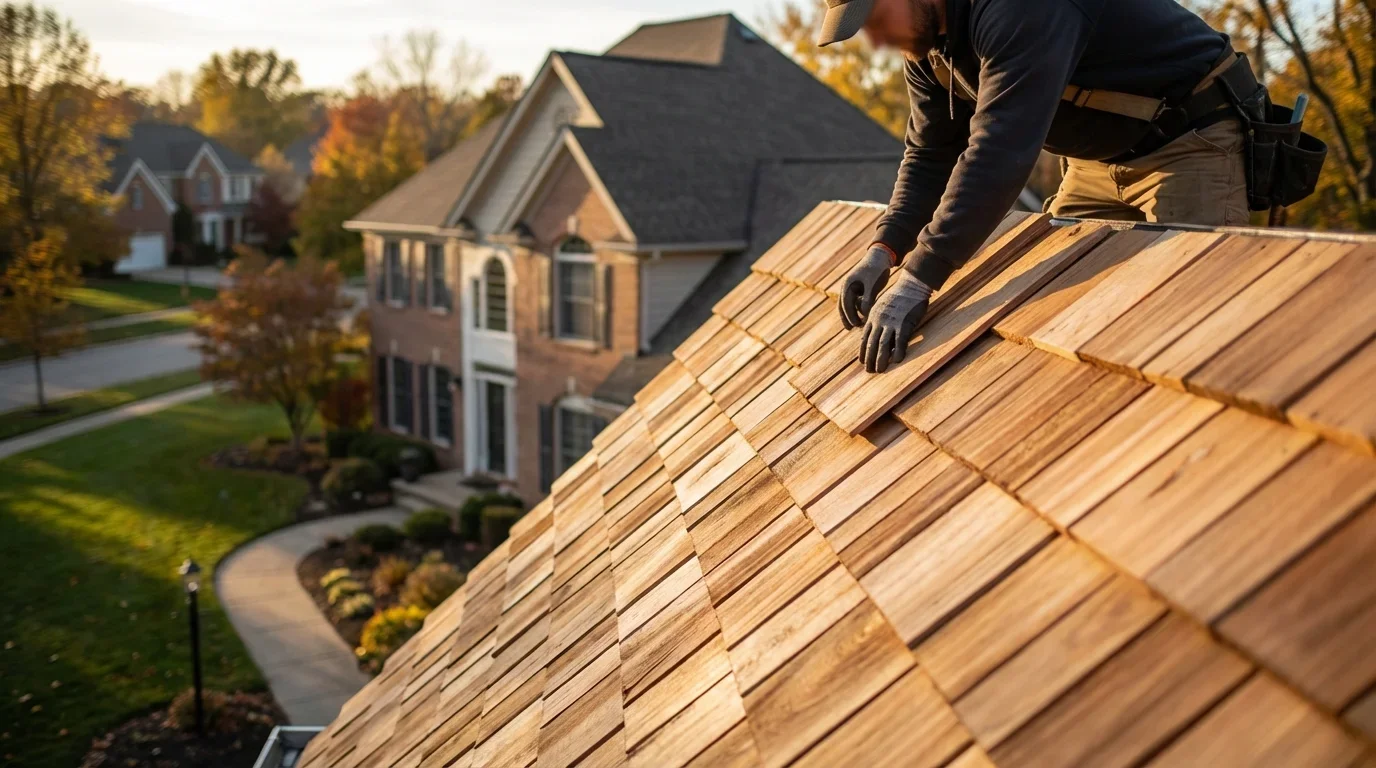
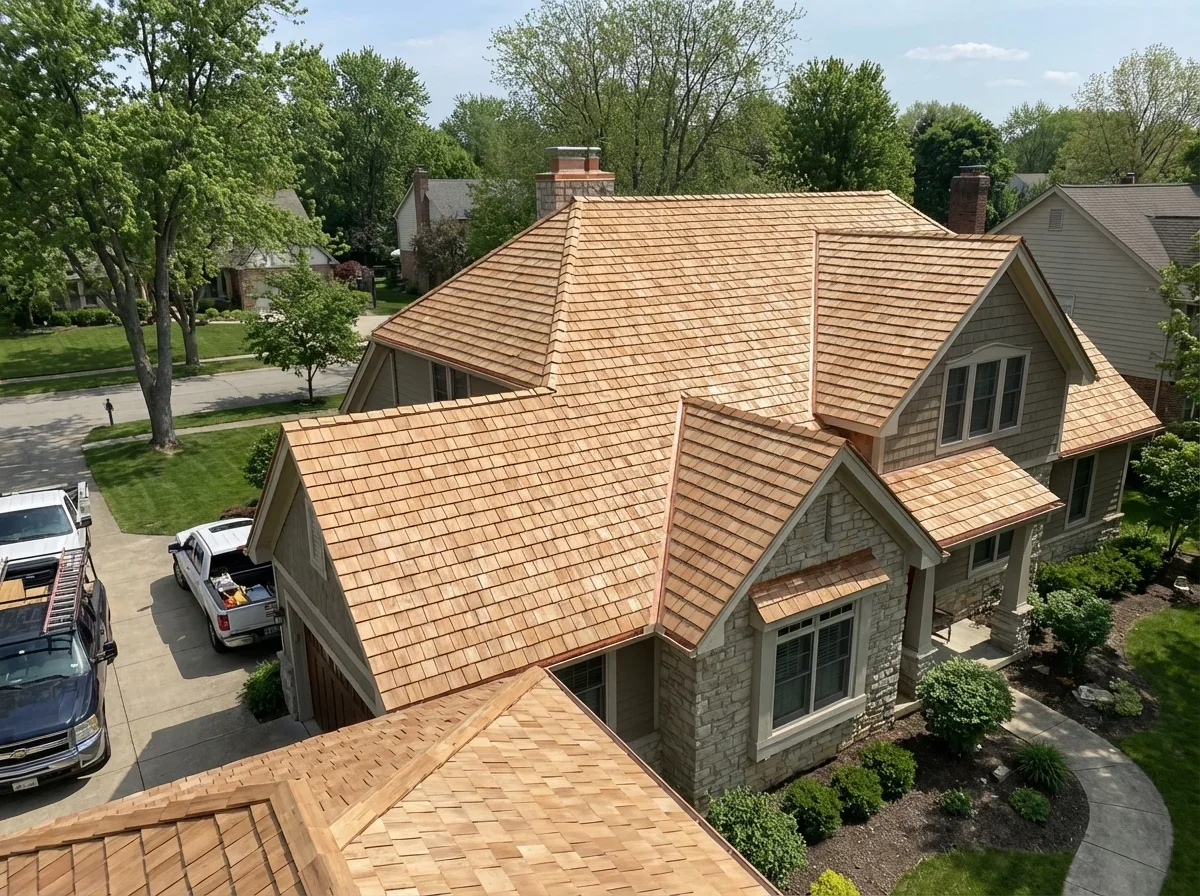
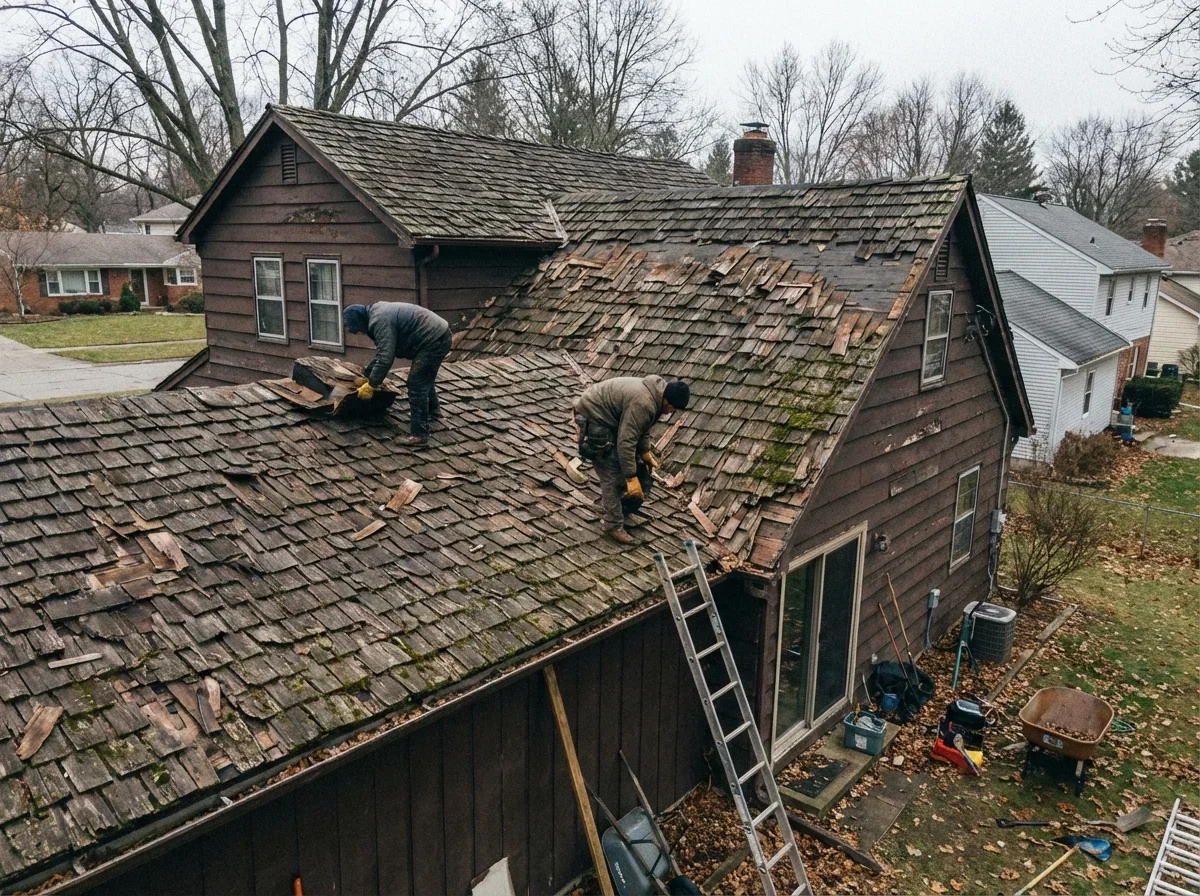
Cedar shake roofing delivers timeless beauty and natural insulation while creating a distinctive architectural statement for your Ohio home. Though requiring more maintenance than synthetic options, properly installed and treated cedar shakes can last 30+ years and provide excellent wind resistance. Our specialized installers understand Ohio's moisture challenges and ensure proper ventilation, treatment, and installation techniques for long-lasting cedar roof performance.
Featured Contractors
View all →
When Cedar Shake Roofing Makes Sense
Cedar shake roofing isn't a universal solution—it's a deliberate choice for homeowners who value authentic materials and understand the maintenance commitment. Historic homes in Columbus neighborhoods like German Village or Cleveland's Ohio City often require period-appropriate roofing during restoration. New construction seeking timeless curb appeal benefits from cedar's natural warmth and texture that asphalt simply cannot replicate.
The material demands respect. Wood roofing needs air circulation to shed moisture from Ohio's humidity and winter snow. Without proper underlayment, ventilation, and installation spacing, even premium-grade cedar fails prematurely. Homes with heavy tree cover face accelerated moss and algae growth—manageable with annual treatment, but a factor in long-term maintenance planning.
Cedar thrives when it breathes. Trapped moisture between shakes and underlayment causes the wood to cup, split, and rot—typically within 10-15 years instead of the expected 25-30.
Consider cedar when you're committed to maintaining natural materials, when architectural style demands authentic wood, or when you're willing to invest more upfront for a roof with distinctive character that appreciates rather than merely protects.
What Does Cedar Shake Roofing Cost in Ohio?
Cedar shake roofing represents a premium investment with costs reflecting material quality, installation complexity, and specialized labor expertise.
| Component | Cost Range | Notes |
|---|---|---|
| Material: #1 Grade Western Red Cedar | $4.50 - $7.00/sqft | Hand-split, heavy shakes, minimal defects |
| Material: #2 Grade Western Red Cedar | $3.00 - $4.50/sqft | More knots, lighter weight, shorter lifespan |
| Labor: Standard installation | $7.00 - $9.00/sqft | Includes underlayment, valleys, ridge |
| Labor: Complex roof (steep/multi-level) | $9.00 - $12.00/sqft | Additional safety equipment, challenging access |
| Fire-retardant treatment | +$1.50 - $2.50/sqft | Required in some municipalities |
| Total installed cost | $12.00 - $18.00/sqft | Typical range for quality installation |
Material Grade and Coverage
#1 Premium Grade shakes deliver maximum longevity—expect 25-30 years in Toledo or Dayton with proper maintenance. These hand-split shakes show minimal knots, consistent thickness (5/8 to 3/4 inch butts), and tight grain that resists splitting. #2 Grade material costs less but typically lasts 15-20 years, acceptable for budget-conscious projects or outbuildings.
A 2,000 square foot roof requires approximately 20 squares (100 sqft per square) of material. Budget $24,000 to $36,000 total for average-complexity installation using #1 Grade materials in the Columbus metro area.
Installation Complexity Factors
Steep pitches (8:12 or greater) add 20-30% to labor costs due to safety equipment and slower installation pace. Multiple roof planes, dormers, and valleys increase material waste and cutting time. Tear-off costs for existing roofing add $2-4/sqft depending on layers present—older homes in Youngstown's historic districts sometimes reveal two or three previous roof layers.
Fire-retardant treatments (Class A rating) cost extra but may be mandatory in dense urban neighborhoods or areas with wildfire risk designations. Treatment adds weight and slightly reduces breathability—factor this into ventilation planning.
The Cedar Shake Installation Process
Cedar shake installation requires specialized techniques that differ fundamentally from composite shingle work. The material's natural expansion and contraction demands precise spacing and fastening methods.
Roof Preparation and Underlayment
Crews start by installing breathable synthetic underlayment—never solid barriers that trap moisture. The deck receives inspection for adequate spacing between boards (historically, skip sheathing; modern installations use solid sheathing with enhanced ventilation). Ridge vents and soffit intake systems ensure continuous airflow beneath the shake layer, critical for moisture management in Cincinnati's humid summers and Canton's snow-heavy winters.
Shake Installation and Spacing
Installation follows strict exposure calculations based on shake length. For 24-inch shakes, typical exposure runs 7.5 inches—creating triple-layer coverage. Each shake requires two corrosion-resistant fasteners placed 1-2 inches from each edge and 1-2 inches above the exposure line. Proper spacing between shakes (1/8 to 1/4 inch) allows for wood expansion when moisture content rises.
| Installation Phase | Timeline | Key Requirements |
|---|---|---|
| Deck preparation & underlayment | 1 day | Ventilation verification, breathable barrier |
| Shake installation (2,000 sqft) | 4-6 days | Weather-dependent, proper exposure |
| Ridge/valley/flashing details | 1-2 days | Metal flashing, specialty cuts |
Ridge and Valley Details
Ridges receive pre-fabricated ridge caps or site-cut shakes assembled with alternating overlaps. Valley installations use woven or metal-lined methods—metal proves more reliable in Akron's freeze-thaw cycles. All penetrations (chimneys, vents, skylights) require custom metal flashing integrated with shake coursing.
How to Choose a Cedar Roofing Contractor
Cedar shake installation demands specialized knowledge that separates qualified wood roofing contractors from general roofers. Use this checklist to evaluate expertise.
Certification and Wood Roofing Experience
- Request photos of completed cedar shake projects with dates and customer references—focus on installations 3-5 years old to assess aging and maintenance outcomes
- Verify Cedar Shake & Shingle Bureau membership or equivalent wood roofing trade association credentials
- Ask about underlayment products and ventilation methods—contractors should specify breathable synthetics and explain airflow strategy without prompting
- Confirm they stock or source true Western Red Cedar—cheaper substitutes (pine, lower-grade cedar) fail faster in Ohio's climate
- Request written maintenance recommendations—quality installers provide annual inspection and treatment schedules
Warranty and Maintenance Plans
- Material warranties: 20-30 years from manufacturers on #1 Grade shakes; verify warranty transfer terms if you sell
- Labor warranties: minimum 5 years on installation workmanship—10 years signals exceptional contractor confidence
- Maintenance plan availability—annual moss/algae treatment and inspection services extend roof lifespan significantly
Red flags: Contractors who suggest solid underlayment (creates moisture traps), rush installations during wet weather (shakes should be installed dry), or cannot explain proper shake spacing and ventilation requirements. Avoid pricing that seems too good—quality cedar installation cannot be rushed or shortcut without compromising the system.
Compare multiple contractors through directories that verify licensing, insurance, and customer feedback. The lowest bid rarely delivers the expertise cedar roofing demands.
Frequently Asked Questions
Related Articles
Need Help With Your Project?
Join 500+ homeowners we've helped