
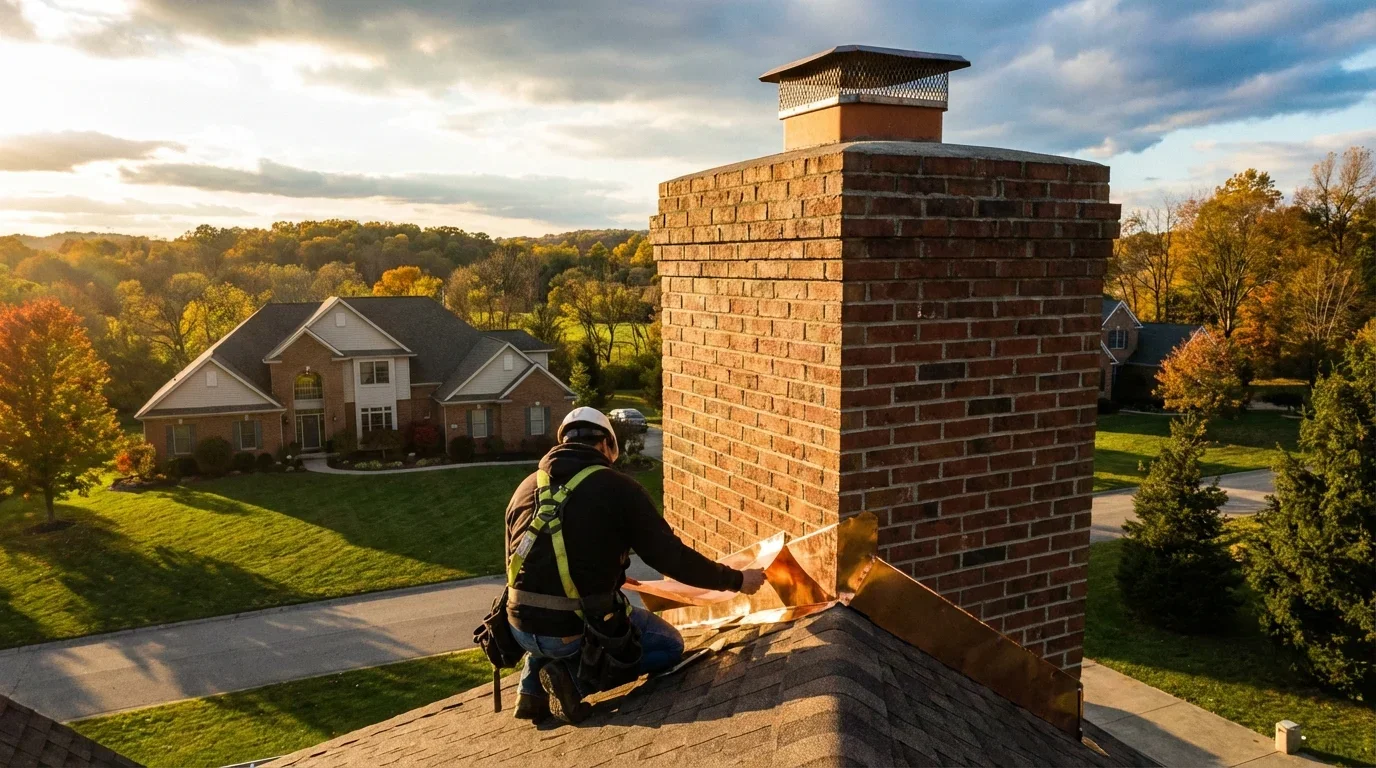
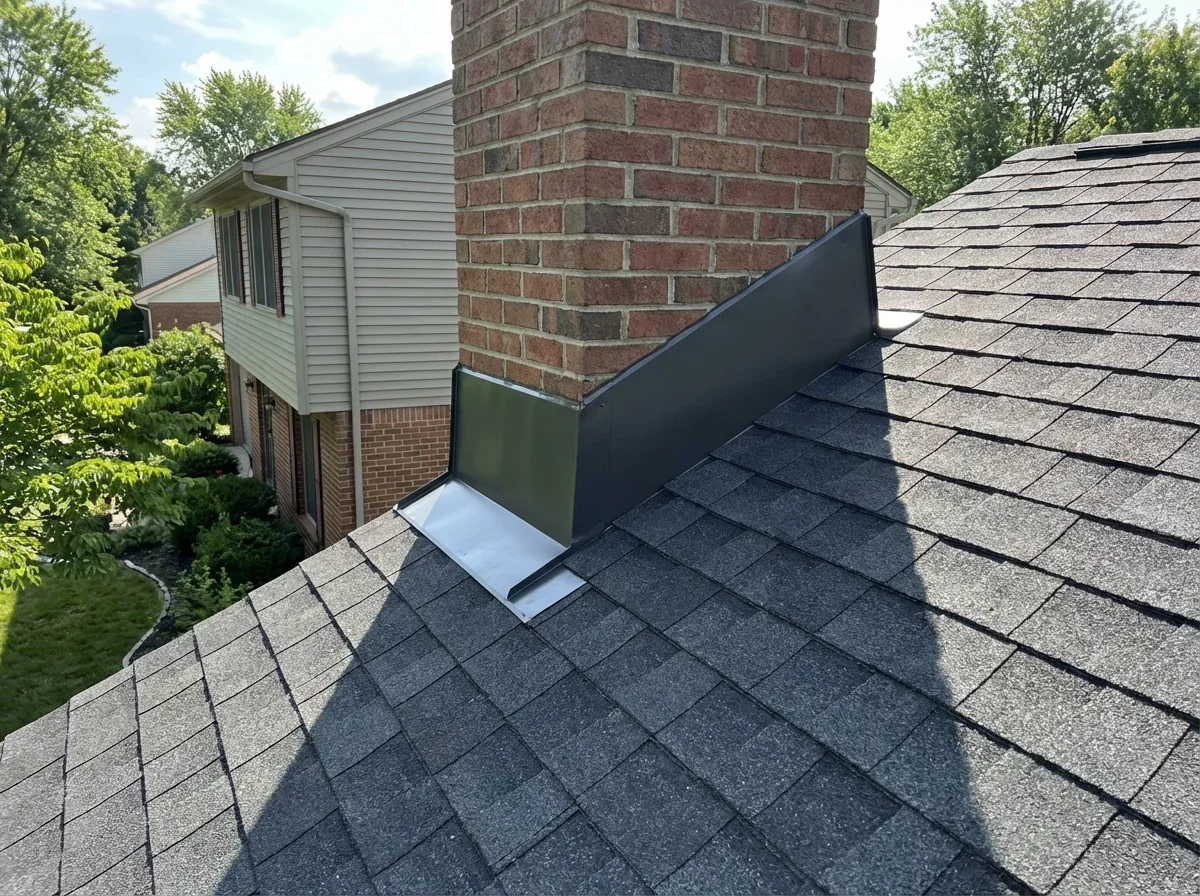
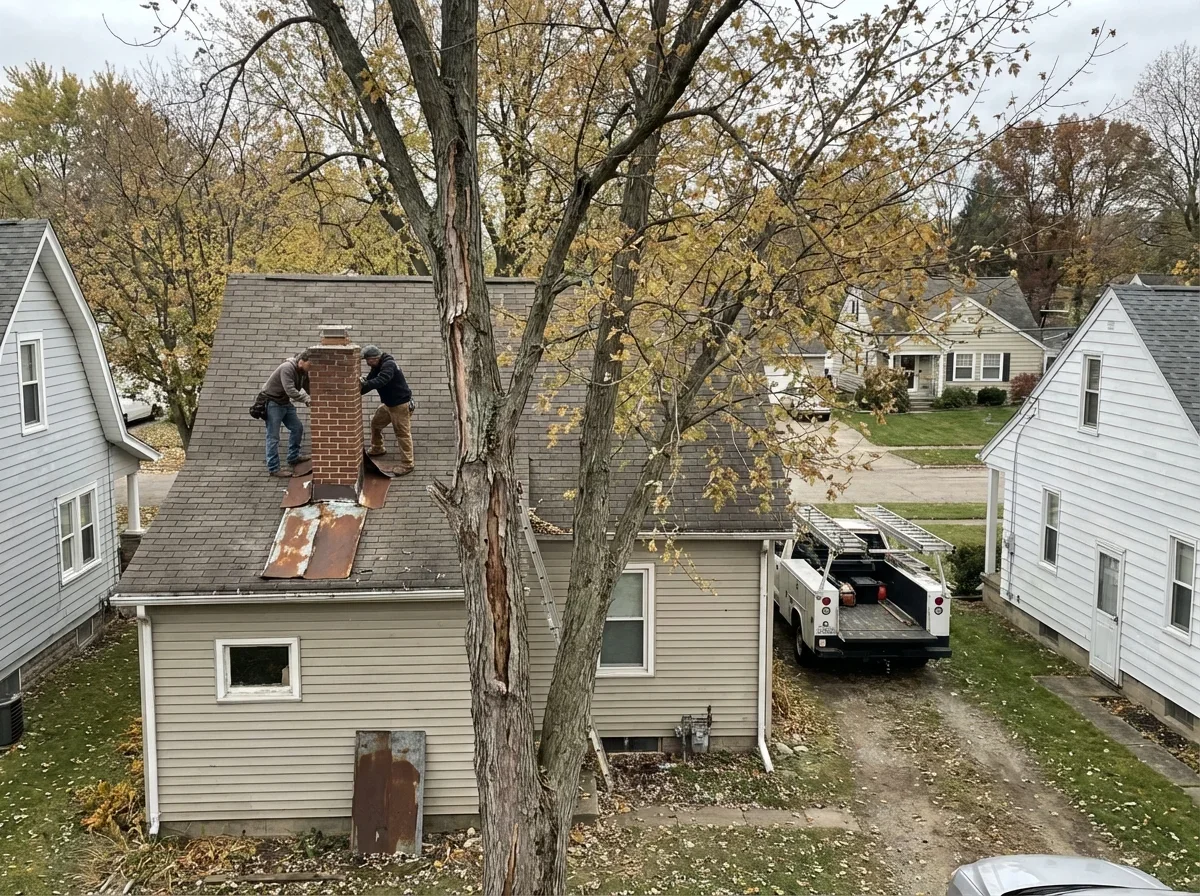
Chimney flashing failures are among the most common sources of roof leaks, requiring specialized installation and sealing techniques to remain watertight. Our chimney flashing experts install proper counter-flashing, step flashing, and cricket systems that protect these vulnerable roof penetrations. Quality chimney flashing work prevents water intrusion, masonry damage, and interior staining while maintaining your roof's integrity through Ohio's demanding weather.
Featured Contractors
View all →



Signs Your Chimney Flashing Is Failing
Chimney flashing creates a watertight seal where the chimney penetrates your roof. When that seal breaks, leaks develop — and they rarely announce themselves until damage spreads.
Interior Warning Signs
Check the rooms adjacent to your chimney. Water stains on ceilings or walls near the chimney base indicate active leaks. You might notice discoloration that darkens after heavy rain, or peeling paint where moisture accumulates. In finished attics across Columbus and Cleveland, homeowners often discover the problem when drywall starts to buckle.
Dampness leads to mold. If you smell mustiness near the chimney or spot dark patches forming, flashing failure is likely the entry point.
Exterior Inspection Points
From ground level, look for rust streaks running down the chimney brick — a clear sign metal flashing is corroding. Visible gaps between the flashing and masonry mean the seal has separated. You might see cracked or missing sealant along counter flashing edges.
Ohio's freeze-thaw cycles destroy flashing fast. Water enters small gaps, freezes overnight, expands the opening, then thaws and penetrates deeper. What starts as a hairline crack becomes a major leak within one winter season.
The two-part flashing system — step flashing woven into shingles and counter flashing embedded in mortar joints — must work together. When either component fails, the entire seal fails.
What Does Chimney Flashing Cost in Ohio?
Flashing repair costs depend on whether you need minor sealant work or complete metal replacement. Here's what homeowners across Toledo, Akron, and Canton typically pay:
| Repair Type | Cost Range |
|---|---|
| Sealant reapplication and minor adjustments | $300 - $600 |
| Partial flashing replacement (one side) | $600 - $1,200 |
| Complete step and counter flashing replacement | $1,200 - $2,500 |
| Reflashing with chimney cricket installation | $2,200 - $3,800 |
Repair vs Complete Replacement Costs
Minor repairs work when the metal itself remains sound. If your flashing is less than 15 years old with isolated sealant failures and no rust, resealing the counter flashing and tightening step flashing connections costs $300-$600.
Complete replacement becomes necessary when:
- Metal shows extensive rust perforation
- Previous repairs have failed multiple times
- Flashing is original to a roof over 20 years old
- Step flashing has separated from the roof deck
- Mortar joints around counter flashing are crumbling
Material Cost Differences
| Material | Lifespan | Typical Cost Premium |
|---|---|---|
| Galvanized steel | 15-25 years | Baseline pricing |
| Aluminum | 20-30 years | +10-15% |
| Copper | 50+ years | +40-60% |
Galvanized steel handles Ohio weather well at the lowest cost. Aluminum resists corrosion better and weighs less, simplifying installation on steep roofs. Copper lasts generations but costs significantly more — justified when matching historic homes in Youngstown or Parma.
Chimney Crickets and Saddles
Building code requires a cricket (also called a saddle) for chimneys wider than 30" measured parallel to the roof ridge. This peaked structure diverts water around the chimney instead of letting it pool behind the structure where ice dams form.
Adding a cricket during reflashing costs $800-$1,500 depending on size and roofing material. It's a one-time investment that prevents the recurring leaks that plague wide chimneys without proper water diversion.
Many older homes in Lorain were built before this code requirement. If your chimney lacks a cricket and you experience seasonal leaks, adding one during flashing replacement eliminates the root cause.
The Chimney Flashing Repair Process
Understanding what happens during the repair helps you evaluate contractor proposals and spot shortcuts that lead to recurring leaks.
Assessment and Diagnosis
A thorough inspection examines both flashing components. The contractor checks step flashing for rust, separation from shingles, and proper overlap. Counter flashing gets inspected for loose mortar joints, bent metal, and deteriorated sealant. They'll verify whether you have a chimney cricket (required by building code for chimneys wider than 30") to divert water around the structure.
From the attic, they look for water stains on roof decking and check whether previous repairs used proper materials or temporary patches.
Removal and Installation Steps
Complete reflashing follows this sequence:
- Shingle removal — Carefully lift shingles around the chimney perimeter to access step flashing
- Old flashing extraction — Remove corroded step flashing and counter flashing; grind out old mortar if counter flashing was embedded
- Deck inspection — Check roof decking for rot; replace damaged sections
- Step flashing installation — Weave new metal pieces between shingle courses, ensuring 4" overlap between sections
- Counter flashing mounting — Cut reglets (slots) into mortar joints 1-1.5" deep, insert counter flashing, and seal with polyurethane caulk
- Cricket installation (if needed) — Build the saddle structure behind the chimney to prevent ice dam formation
- Final sealing — Apply high-grade sealant at all metal-to-masonry contact points
Most reflashing jobs in Cincinnati and Dayton take 1-2 days depending on chimney size and whether a cricket is added.
Sealing and Weatherproofing
The final step determines longevity. Quality contractors use polyurethane or silicone sealants rated for metal-to-masonry applications — not generic caulk that cracks within a year. They ensure proper overlap at all flashing joints and verify that water flows away from seams.
How to Choose a Chimney Flashing Contractor
Chimney flashing requires specialized skills beyond general roofing. The contractor must understand masonry, metal fabrication, and how these systems interact with roof structure.
Questions to ask:
- How do you install counter flashing? (Correct answer: cut reglets into mortar joints and embed the metal — not just surface-mount with caulk)
- What flashing material do you recommend for my roof type and why? (Should explain trade-offs between materials, not push one option)
- Do you inspect from both the roof and attic before quoting? (Attic inspection reveals hidden water damage)
- Will you install a cricket if my chimney requires one? (Chimneys over 30" wide need this per code)
- What warranty covers the flashing work specifically? (Should offer minimum 5-year leak warranty on labor)
- Can you show photos of recent flashing jobs? (Look for clean counter flashing lines and proper step flashing overlap)
Red flags that indicate inexperienced contractors:
- Proposing to seal gaps with caulk instead of replacing failed metal
- Offering "roof coating" or "rubberized sealant" as a permanent fix
- Unable to explain the difference between step flashing and counter flashing
- Suggesting you can wait another year when rust or gaps are visible
- No mention of code requirements for chimney crickets
Verify credentials: Ohio doesn't require statewide roofing licenses, but quality contractors carry general liability insurance minimum $1 million and workers' compensation coverage. Ask for certificates before work begins.
The best way to compare local contractors is by evaluating their specific chimney flashing experience, material warranties, and workmanship guarantees. Generic roofers often subcontract flashing work — you want specialists who handle this repair regularly.
Frequently Asked Questions
Related Articles
Need Help With Your Project?
Join 500+ homeowners we've helped