
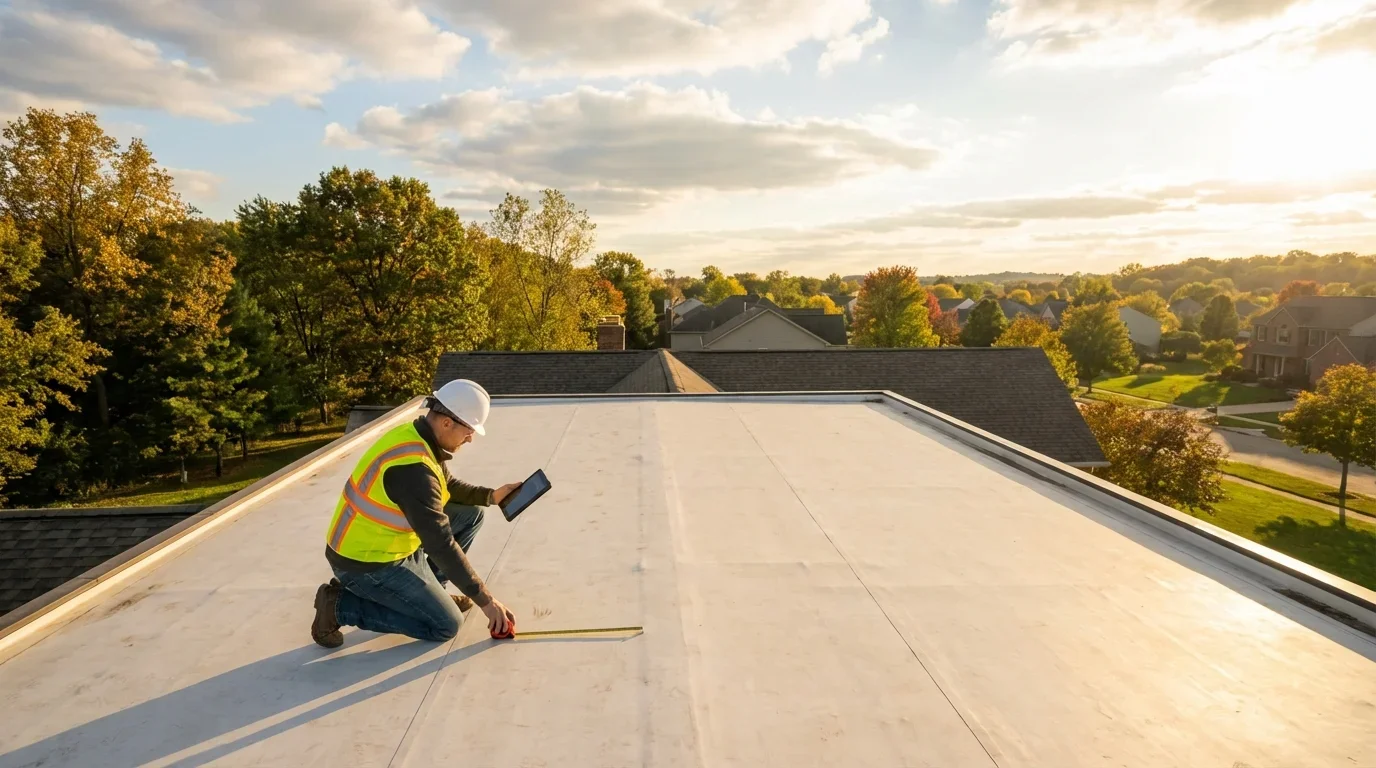
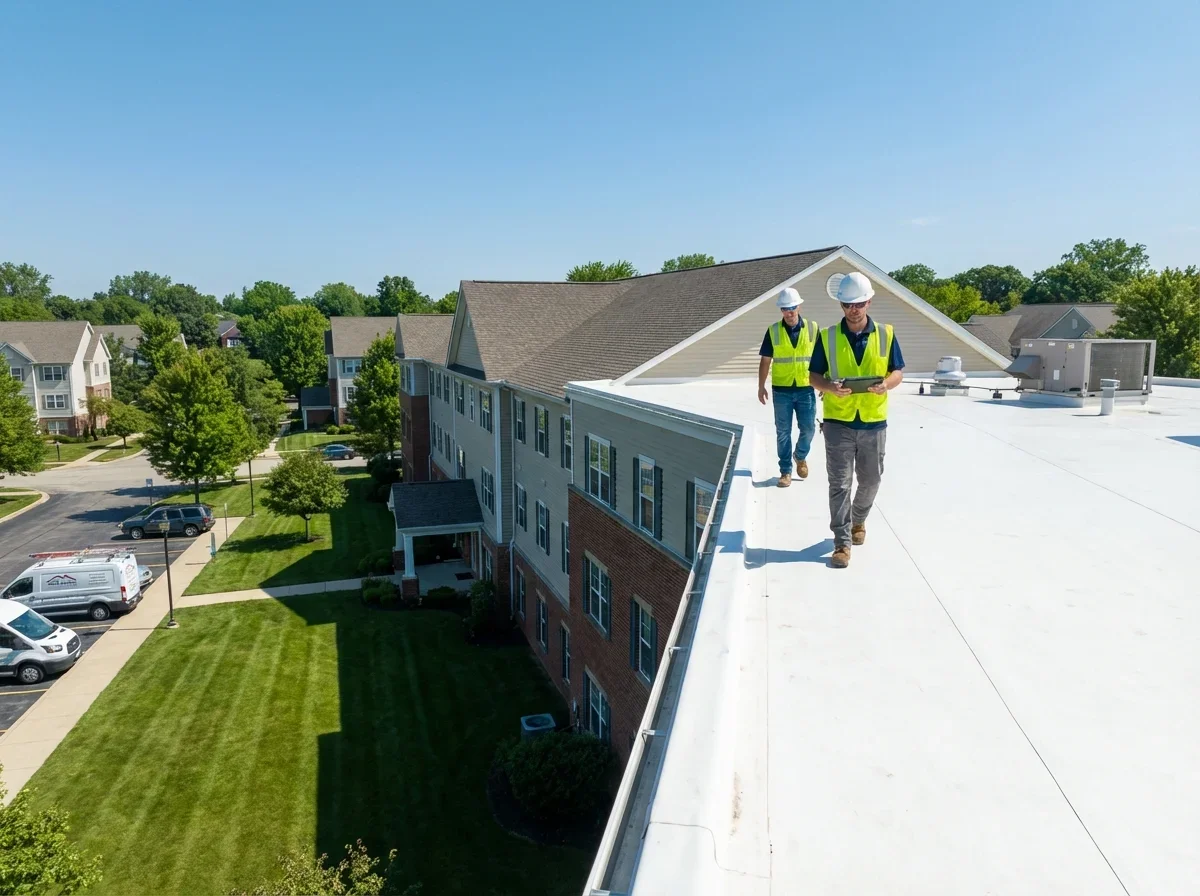
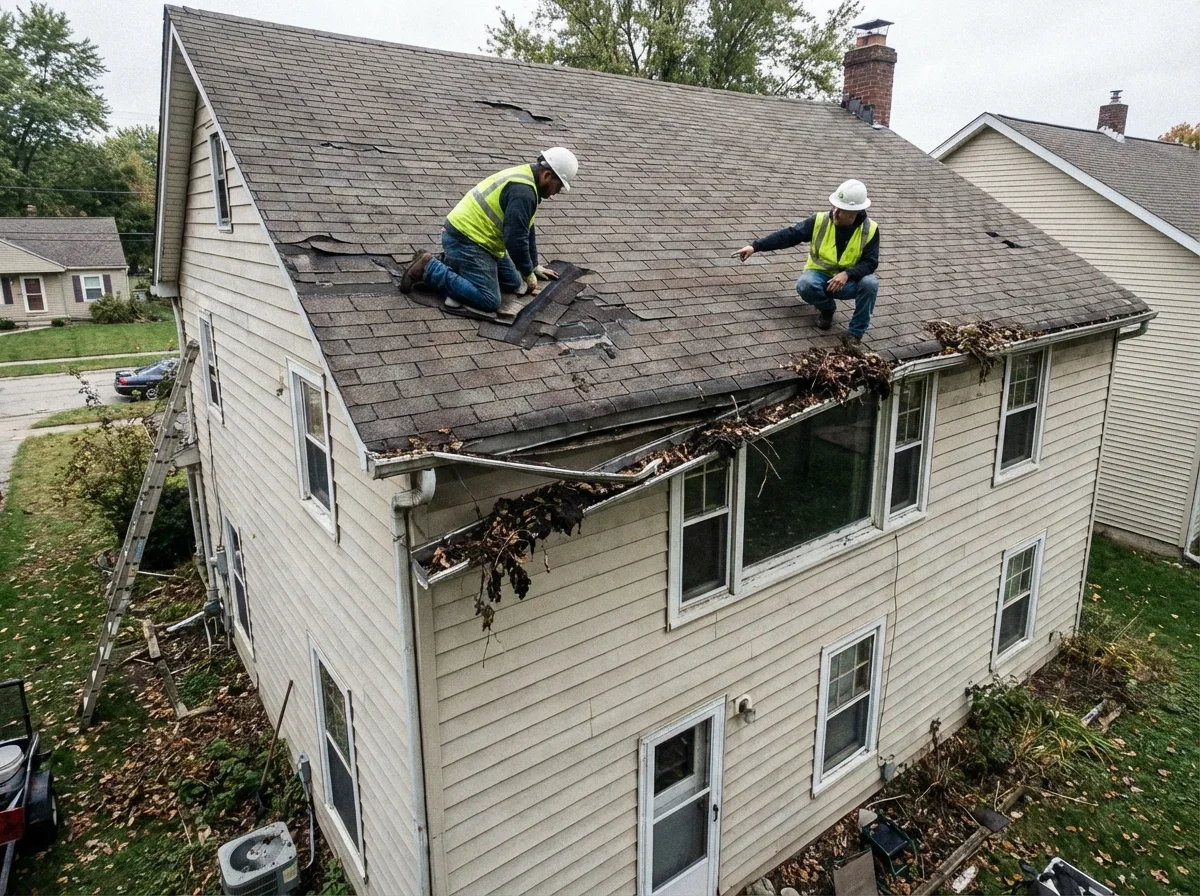
Regular commercial roof inspections protect your business investment by identifying problems before they cause interior damage, inventory loss, or operational disruptions. Our certified inspectors evaluate membrane condition, drainage systems, flashing, and penetrations using proven assessment protocols. Scheduled inspections extend roof life, maintain warranties, and help Ohio business owners budget for future repairs or replacement.
Featured Contractors
View all →

When Do You Need a Commercial Roof Inspection?
Schedule inspections twice yearly — spring after freeze-thaw cycles end, and fall before winter sets in. Ohio's temperature swings crack membranes, open seams, and create ponding areas that escalate fast.
Beyond the seasonal schedule, inspect immediately after:
- Severe storms (high winds, hail, heavy snow loads)
- Visible interior stains or drips
- HVAC equipment installation or roof penetrations
- Preparing to sell or lease commercial property
- Warranty compliance deadlines (most require annual documentation)
Catching moisture early prevents structural decay. A $600 leak repair becomes a $15,000 roof section replacement after six months of hidden water damage.
Commercial roofs in Toledo and Cleveland face additional stress from lake-effect snow loads. Canton and Youngstown see heavier freeze-thaw cycles. Flat and low-slope roofs — common in Ohio warehouses and retail centers — hide problems longer than pitched residential roofs.
If your roof is over 10 years old, increase inspection frequency. Membrane degradation accelerates after the first decade, and ponding water becomes a chronic issue rather than occasional concern.
What Does a Commercial Roof Inspection Cost in Ohio?
Plan for $300-$800 for buildings under 20,000 square feet. Costs scale with building size, roof complexity, and technology deployment.
| Inspection Type | Typical Cost Range |
|---|---|
| Basic visual inspection (documentation only) | $300 - $500 |
| Standard with moisture detection | $500 - $800 |
| Infrared thermography scan | +$200 - $400 |
| Core sampling (2-4 cores) | +$150 - $300 |
| Comprehensive report with repair estimates | +$100 - $200 |
Cost Factors That Impact Pricing
Building size and roof complexity drive base pricing. Multi-level roofs, extensive HVAC equipment, and multiple roof types on one building increase inspection time. Accessibility matters — Columbus high-rises require different equipment than Akron single-story warehouses.
Technology requirements add cost but deliver value. Thermal imaging finds problems you can't see from ladders. Moisture meters quantify damage severity for insurance claims and budget planning.
Inspector credentials correlate with pricing. NRCIA-certified inspectors (Registered Roof Observer certification) charge premium rates but follow standardized protocols that hold up under warranty disputes and litigation.
Return on Investment
Early detection prevents exponential cost escalation. A documented inspection finding a $400 flashing repair saves the $8,000 interior restoration that happens after six months of undetected leaks. Roof replacement averages $8-$12 per square foot in Ohio — $80,000 to $120,000 for a 10,000 sqft roof — while targeted repairs rarely exceed $5,000.
Inspection documentation also:
- Maintains warranty validity (most require annual professional inspection)
- Supports insurance claims with pre-loss condition evidence
- Guides capital budget planning with predictive maintenance timelines
- Increases property value through documented maintenance history
Most Cincinnati and Cleveland property managers budget $1,200-$1,600 annually for two seasonal inspections on typical commercial buildings.
The Commercial Roof Inspection Process
Professional inspections follow a three-tier approach: visual documentation, technology-assisted detection, and invasive sampling when needed.
Visual Assessment and Documentation
Inspectors start with a complete walkable surface review:
- Surface examination — membrane condition, seam integrity, flashing details, penetration seals
- Drainage evaluation — ponding areas, scupper function, gutter performance
- Fastener and panel assessment — exposed fasteners, metal panel corrosion, cap detachment
- Interior review — ceiling stains, insulation moisture, structural deflection
This phase identifies obvious defects and establishes baseline conditions. Most inspectors photograph extensively and GPS-tag problem areas for tracking over time.
Moisture Detection and Thermal Imaging
Infrared thermography reveals what eyes can't see. Wet insulation shows temperature differentials on thermal scans — even when the membrane looks intact from above. Nuclear moisture meters and capacitance scanners quantify saturation levels.
This technology is critical for EPDM, TPO, and modified bitumen roofs common across Columbus and Dayton commercial districts. Moisture trapped under membranes destroys deck integrity and voids warranties.
Core Sampling and Lab Analysis
When scans indicate extensive moisture or the roof age exceeds 15 years, inspectors extract core samples to:
- Confirm insulation type and R-value
- Test for moisture content percentage
- Assess deck condition beneath membrane
- Determine if overlay is viable vs. full tear-off
Cores get patched immediately with temporary sealant, then permanent repair within 48 hours. Most Ohio inspections require 2-4 cores for buildings under 50,000 square feet.
How to Choose a Commercial Roof Inspector
Not all inspectors carry the same credentials or deliver the same report quality. Ask specific questions before hiring.
Questions to Ask
- What certifications do you hold? Look for NRCIA Registered Roof Observer (RRO) or similar commercial roof-specific credentials, not just general contractor licenses
- What technology do you deploy? Infrared cameras, nuclear moisture meters, and capacitance scanners should be standard equipment
- Who performs the actual inspection? Some companies send junior technicians while certified inspectors only review reports
- What does the report include? Demand photo documentation, GPS-tagged defect locations, moisture maps, and prioritized repair recommendations
- Do you provide repair cost estimates? Useful for budget planning, but verify the inspector doesn't also bid the work (conflict of interest)
- How do you handle core sample repairs? Should be patched same-day with permanent repair scheduled within 48 hours
Red Flags
- No insurance documentation — commercial inspectors need $2M+ general liability plus professional liability coverage
- Verbal-only reports — if it isn't documented with photos and data, it didn't happen (especially for warranty and insurance purposes)
- Pressure to schedule immediate repairs — good inspectors assess and document; they don't sell fear
- No thermal imaging capability — visual-only inspections miss the majority of moisture intrusion on flat roofs
Ohio Licensing Requirements
Ohio doesn't require specific roof inspector licenses, but contractors performing roof work need state contractor registration and local business licenses. Verify workers' compensation coverage and request certificates of insurance naming your property.
Compare multiple inspectors through Buckeye Roof Pros directory listings — filter by certification level, technology capabilities, and service areas across Dayton, Parma, Lorain, and surrounding communities. Request sample reports to evaluate documentation quality before committing.
Frequently Asked Questions
Related Articles
Need Help With Your Project?
Join 500+ homeowners we've helped