
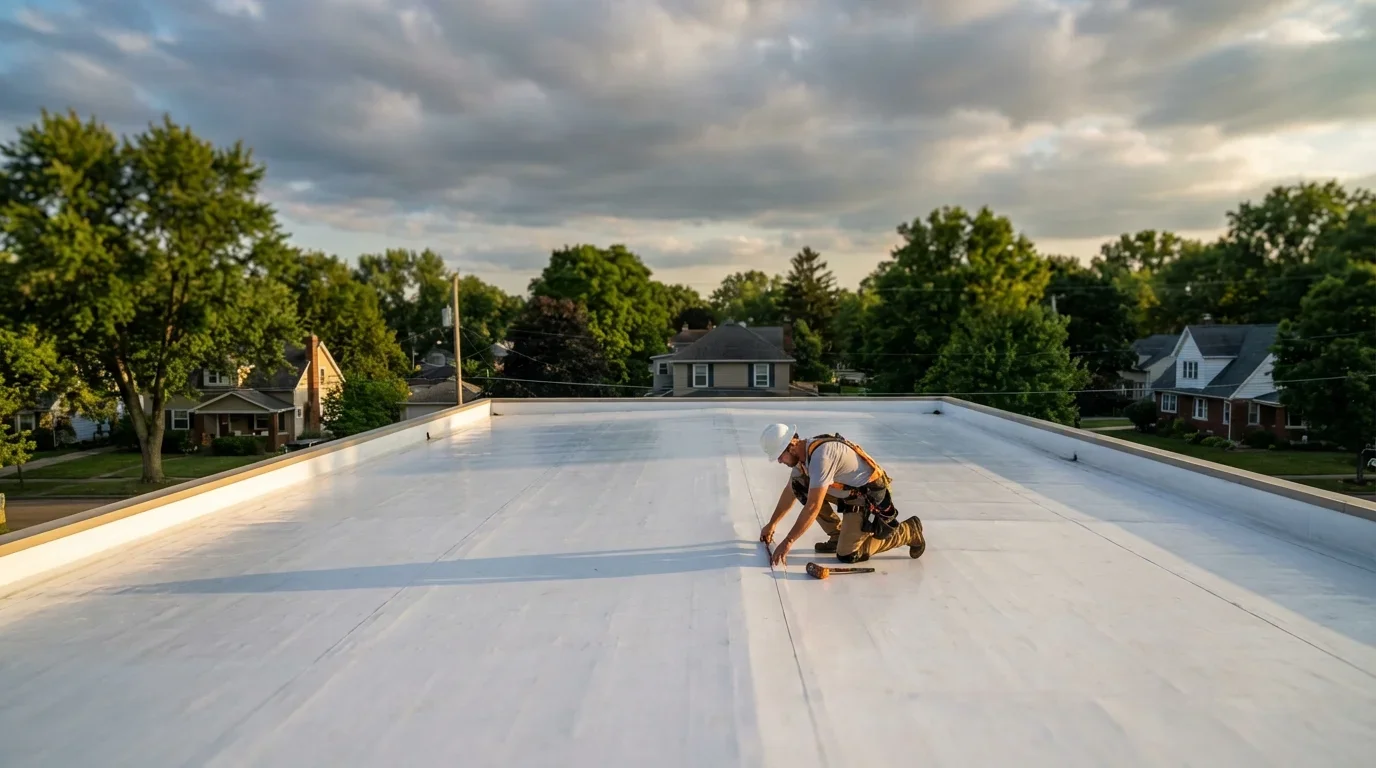
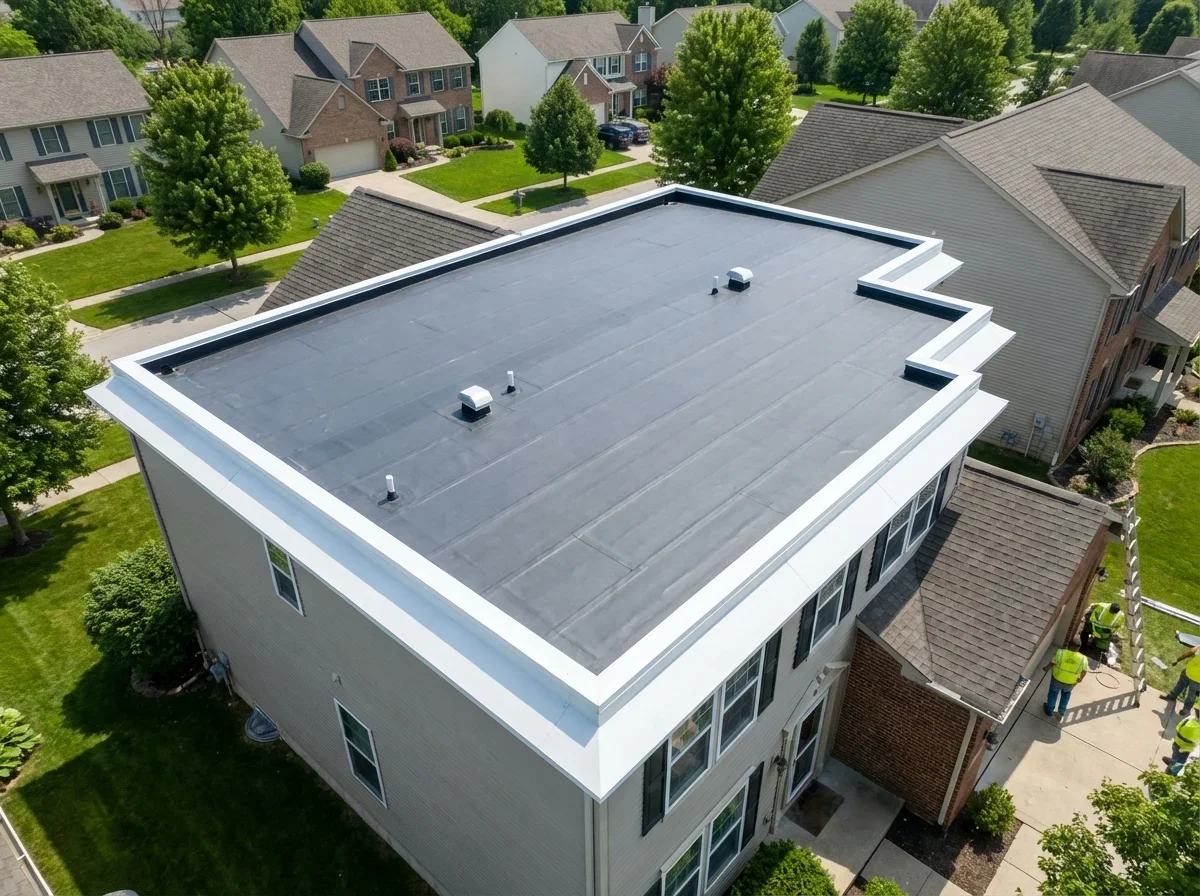
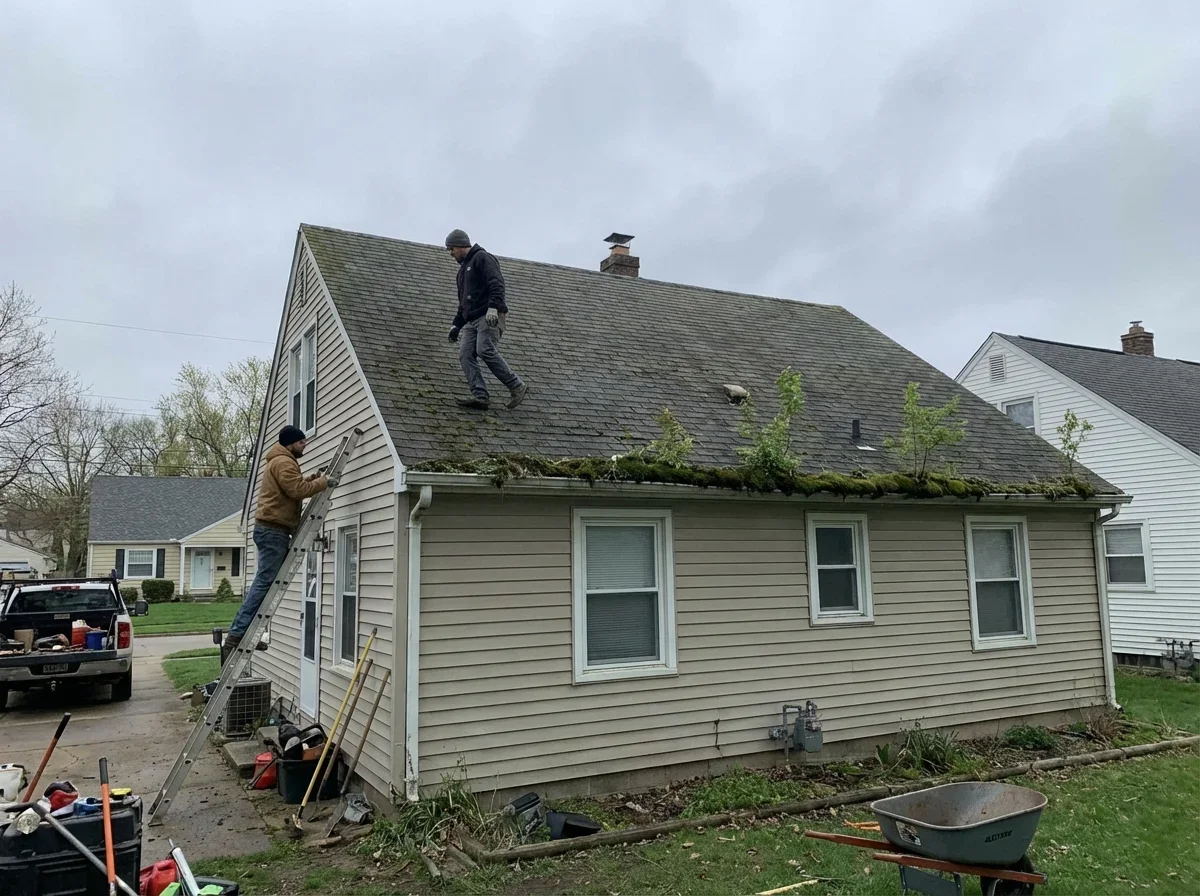
Proactive commercial roof maintenance programs extend system life, prevent unexpected failures, and protect your Ohio business from costly disruptions. Our scheduled maintenance includes inspections, minor repairs, drain cleaning, membrane sealing, and detailed documentation for warranty compliance. Regular professional attention catches small issues before they escalate, maximizing your roof investment and minimizing emergency repair expenses.
Featured Contractors
View all →


When Does Your Building Need a Maintenance Program?
Most commercial roofs start failing years before anyone notices. By the time water shows up inside, you're already looking at membrane replacement instead of a $2,000 patch job.
You need a maintenance program if:
- Your roof is 5+ years old (prime time for proactive care)
- You're managing multiple properties across Ohio and can't inspect them all
- Your manufacturer warranty requires annual inspections (most do)
- You've had emergency repairs in the past two years (pattern emerging)
- The building has tenants or operations that can't tolerate disruption
Ohio's freeze-thaw cycles accelerate membrane degradation. Water sits in low spots, freezes, expands the seam, melts, and works deeper into the insulation layer. One winter season can turn a small blister into a full building envelope problem.
Buildings in Columbus and Cleveland face 40-60 freeze-thaw events per winter. Each cycle tests every seam, flashing, and penetration on your roof.
Property managers in Cincinnati and Toledo see it repeatedly: the roof that "looked fine" in September has three active leaks by March. Storm debris from lake-effect weather clogs drains, water ponds, membranes fail. A quarterly inspection catches this before it becomes a capital expense.
What Does Commercial Roof Maintenance Cost in Ohio?
Annual Program Pricing by Roof Type
| Roof Type | Cost per Sqft/Year | What Drives the Price |
|---|---|---|
| TPO/PVC Single-Ply | $0.18-$0.25 | Seam integrity checks, membrane patches |
| EPDM Rubber | $0.15-$0.22 | Simpler repairs, fewer fasteners |
| Modified Bitumen | $0.22-$0.30 | Seam maintenance, granule loss inspection |
| Built-Up Roof (BUR) | $0.25-$0.35 | Blister repairs, gravel management |
| Metal Panel Systems | $0.20-$0.28 | Fastener tightening, sealant replacement |
A 30,000 sqft TPO roof in Canton runs $5,400-$7,500 annually for bi-annual service. That's $450-$625 per visit including minor repairs up to $500 per occurrence. Larger repairs bill separately but get priority scheduling.
Inspection-Only vs. Full-Service Contracts
Inspection-only contracts cost $0.08-$0.12/sqft annually. You get scheduled visits and detailed reports, but repairs are quoted separately and require approval. This works for newer roofs (under 5 years) or tight budgets, but you lose the preventive value.
Full-service contracts bundle inspections with minor repairs, drain clearing, and emergency response. The ROI shows up in year two: buildings on full-service programs in Columbus and Cleveland average 40-60% fewer emergency repair calls and extend roof replacement timelines by 3-5 years.
Key cost factors:
- Building access (roof hatches vs. ladder access affects labor time)
- Number of penetrations (more HVAC units = more flashing to maintain)
- Roof slope and drainage (ponding water areas require more attention)
- Previous maintenance history (neglected roofs need more intensive initial work)
Most Ohio contractors offer multi-building discounts: 10-15% off when you bundle 3+ properties under one contract. Property managers in Youngstown and Parma use this to standardize maintenance across portfolios.
Insurance and warranty protection: Many manufacturer warranties require annual inspections by certified contractors. Missing documentation voids coverage. A maintenance contract keeps you compliant and provides the paper trail insurers want when claims arise.
The Commercial Roof Maintenance Process
Initial Roof Assessment
Your contractor documents current conditions before any maintenance begins. They map problem areas, photograph all penetrations and flashings, test moisture levels in the membrane, and establish a baseline. This becomes your roof's health record — critical for tracking deterioration and justifying future capital planning.
Most assessments in Akron and Dayton take 2-4 hours for a 20,000 sqft building. You receive a written report with photos, a condition rating (1-10 scale), and a recommended service interval.
Quarterly or Bi-Annual Service Visits
Scheduled visits follow a consistent checklist. Contractors clear all drains and scuppers, inspect and reseal flashings around HVAC units and vents, patch small membrane blisters or punctures, remove debris, document ponding water areas, and check edge metal and copings.
| Visit Frequency | Best For | Typical Cost Range |
|---|---|---|
| Quarterly (4x/year) | Critical facilities, hospitals, data centers | $0.30-$0.40/sqft annually |
| Bi-annual (2x/year) | Standard commercial, office buildings | $0.20-$0.30/sqft annually |
| Annual | Small commercial, owner-occupied buildings | $0.15-$0.20/sqft annually |
Timing matters in Ohio. Schedule spring visits after thaw to catch winter damage, and fall visits before first freeze to secure the roof for winter. Most contracts include emergency response for storm damage between scheduled visits.
Reporting and Lifecycle Planning
After each visit, you receive documentation: photos of completed work, list of repairs made, updated condition assessment, and recommendations for next visit. This paper trail protects your warranty and helps you budget for replacement when the roof reaches end of life.
How to Choose a Commercial Roof Maintenance Provider
Questions to Ask Before Signing
- What manufacturer certifications do you hold? (GAF, Carlisle, Firestone, etc. — matters for warranty work)
- What's your average emergency response time? (4 hours? 24 hours? Critical for storm damage)
- What repairs are included in the base contract vs. billed separately? (get the dollar threshold in writing)
- How do you document each visit? (ask to see sample reports — photos, condition ratings, repair logs)
- Who actually performs the work? (employees or subcontractors — matters for consistency)
- What happens if you find a major issue during inspection? (priority scheduling? cost estimates within 48 hours?)
Contract Terms and Service Level Agreements
Read the SLA carefully. Look for guaranteed response times, clear definitions of "emergency" vs. "routine" repairs, and cancellation terms. Most Ohio contracts run 1-3 years with annual cost adjustments tied to CPI or material inflation.
Red flags:
- Vague repair inclusions ("minor repairs as needed" without dollar limits)
- No documentation standards or photo requirements
- Long-term contracts with no performance guarantees
- Requiring you to use them for all roof work (limits competitive bidding on major projects)
- No local references from similar building types
Track Record with Similar Buildings
Ask for client references managing similar square footage and roof types in Ohio. A contractor maintaining 200,000 sqft of industrial metal roofs in Lorain has different expertise than one focused on 10,000 sqft TPO roofs on medical offices. Match their experience to your portfolio.
Check their relationship with local suppliers and manufacturers. Contractors with strong factory relationships get faster material approvals for warranty repairs and better pricing on replacement components. This matters when a custom flashing needs fabrication on short notice.
Frequently Asked Questions
Related Articles
Need Help With Your Project?
Join 500+ homeowners we've helped