
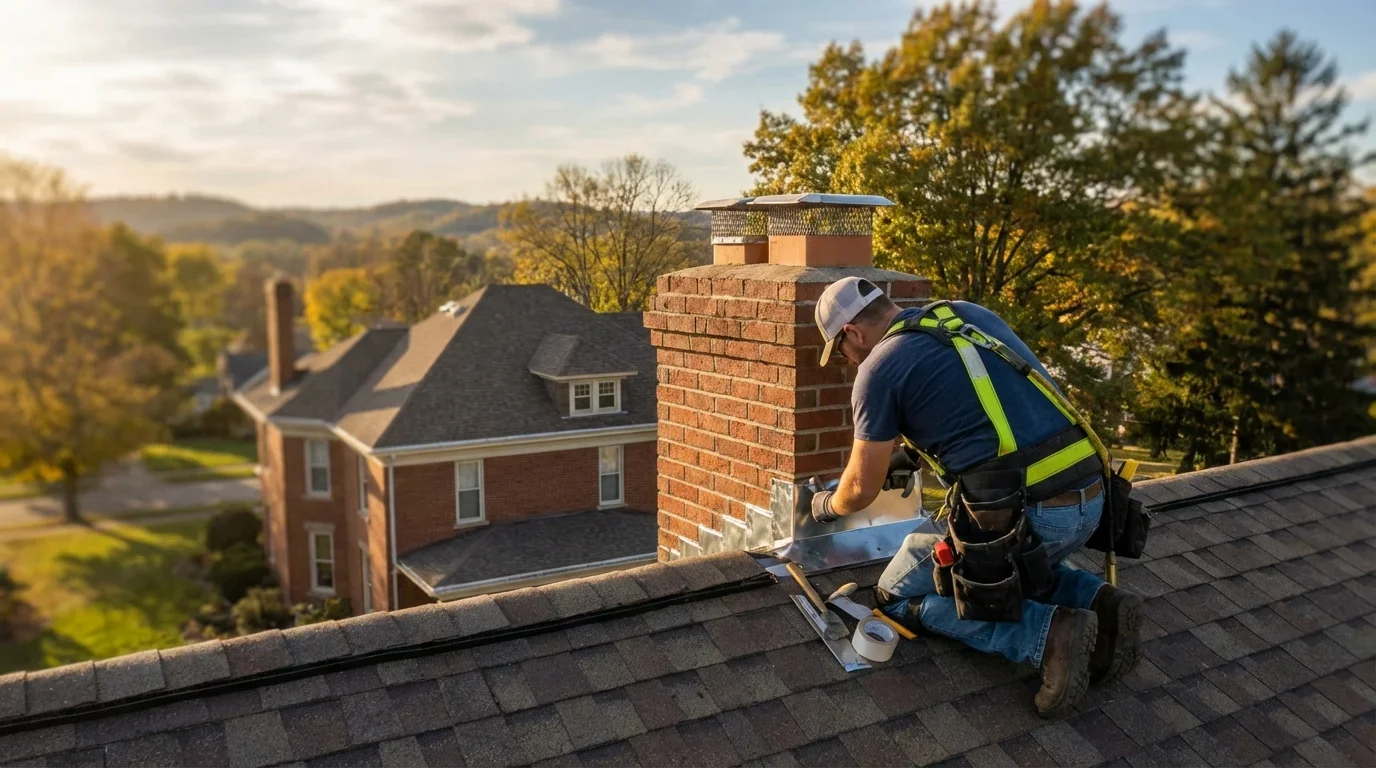
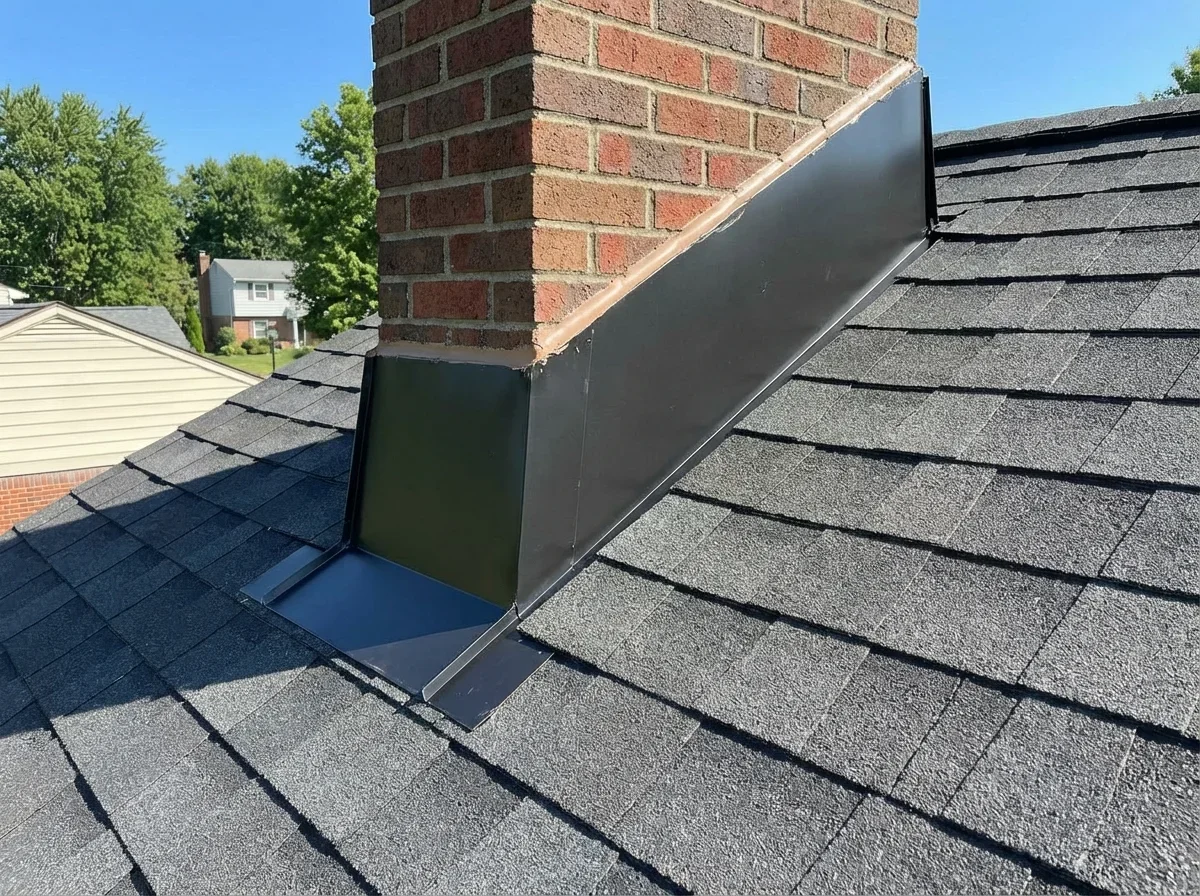
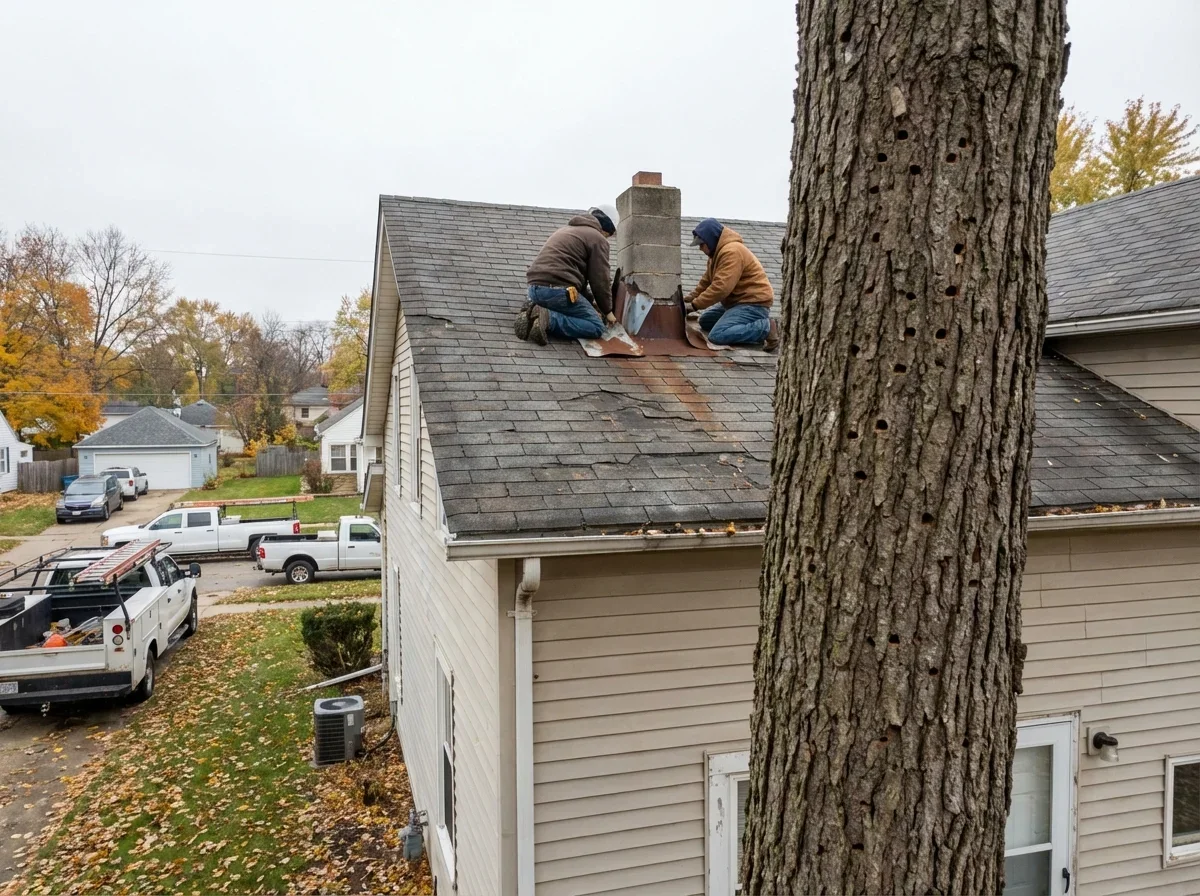
Roof flashing around chimneys, skylights, valleys, and penetrations is your primary defense against water intrusion—and when it fails, serious leaks occur. Our flashing repair specialists identify compromised metal, install proper step flashing, and seal vulnerable areas using professional-grade materials. Properly repaired flashing ensures these critical transition points remain watertight through Ohio's heavy rains, snow melt, and freeze-thaw cycles.
Featured Contractors
View all →




Signs You Need Flashing Repair
Flashing is the metal or composite barrier that seals roof penetrations and intersections. It's installed around chimneys, in valleys where two roof slopes meet, around skylights, at plumbing vents, and where dormers meet the main roof. When it works, you never think about it. When it fails, water shows up in your attic.
Look for these warning signs:
- Water stains on ceilings or walls near chimneys, skylights, or dormers — often appearing after heavy rain or snow melt
- Visible rust, corrosion, or holes in metal flashing
- Lifted or missing shingles around penetrations
- Gaps between flashing and the surface it's supposed to seal
- Drips during wind-driven rain but not during calm storms
Ohio's freeze-thaw cycles accelerate flashing failure. Ice dams force water under shingles and behind flashing. Wind-driven rain from lake-effect systems in Cleveland and Toledo tests every seal. Once water penetrates, it travels along rafters and shows up feet away from the actual failure point — making DIY diagnosis difficult.
Most flashing installed with asphalt shingles lasts 15-25 years depending on material. If your roof is approaching that age and you're seeing stains, the flashing is the likely culprit.
Flashing leaks escalate fast. A small rust hole becomes a rotted roof deck within two seasons. Water doesn't just drip — it saturates wood, grows mold, and compromises structural framing.
What Does Flashing Repair Cost in Ohio?
Lead with real numbers. Flashing work pricing depends on location, extent of damage, and accessibility.
| Repair Type | Typical Cost Range |
|---|---|
| Vent boot replacement (single pipe) | $200 - $400 |
| Small valley patch or step flashing section | $350 - $650 |
| Skylight reflashing | $600 - $1,200 |
| Full chimney reflashing (base and counter) | $1,500 - $3,500 |
| Complex dormer or wall flashing | $800 - $2,000 |
What Drives Costs Up
- Accessibility — steep roofs or three-story homes in Cincinnati neighborhoods require more safety equipment and time
- Material choice — aluminum costs $3-5 per linear foot installed, copper runs $12-20
- Hidden damage — rotted roof deck adds $400-800 for sheathing replacement
- Chimney size — larger masonry chimneys need more step flashing sections and longer counter-flashing runs
Repair vs. Full Replacement Decision
Patch a single rusted flashing section if:
- Damage is isolated to one area
- Surrounding flashing shows no corrosion
- Existing material is less than 15 years old
Replace all flashing around a penetration if:
- Multiple failure points exist (rust in several spots, gaps at both sides of chimney)
- Material is galvanized steel approaching 20 years old
- You're replacing the entire roof — never reuse old flashing under new shingles
Most contractors in Akron and Canton will recommend full chimney reflashing over patchwork once you're past the 15-year mark. It costs 3-4× more upfront but eliminates callback leaks.
Copper flashing costs 2-3× aluminum but lasts 50+ years and never rusts — worth considering if you plan to stay in the house long-term or want to match historic home aesthetics common in Cleveland and Toledo.
The Flashing Repair Process
Flashing work isn't glamorous, but it's precise. A quality repair job involves more than slapping caulk on a rust spot. Here's what actually happens:
1. Inspection and Assessment
The contractor examines all flashing points — not just the obvious problem area. They check for rust perforation, sealant failure, improper installation from previous work, and hidden damage under shingles. They'll often inspect from both the roof surface and the attic to trace water pathways.
2. Removal and Preparation
For isolated repairs, they remove shingles around the damaged flashing section, extract old nails, and pull the failed piece. For full reflashing (common around chimneys in Columbus and Dayton), they remove multiple shingle courses and counter-flashing embedded in mortar joints.
The roof deck gets inspected for rot. Damaged sheathing is replaced before new flashing goes in.
3. Installation and Sealing
New flashing integrates with the shingle layers — step flashing goes under each shingle course, valley flashing runs beneath shingles on both slopes, counter-flashing overlaps base flashing and gets sealed into masonry. Ice-and-water barrier often goes under the flashing for double protection.
Quality contractors match or upgrade materials (aluminum or copper instead of galvanized steel). They seal all nail penetrations and use code-compliant fastening patterns.
4. Testing and Final Inspection
Some contractors water-test the repair before final shingle installation. They check from the attic during the test to confirm the leak path is sealed.
Most flashing repairs take 4-8 hours for isolated work, 1-2 days for full chimney reflashing. Scheduling depends on dry weather — Ohio's spring and fall offer the most consistent work windows.
How to Choose a Flashing Repair Contractor
Flashing work requires roofing expertise and sheet metal skills. Not every roofer excels at both. Use this checklist:
Questions to Ask
- How do you determine if repair or full replacement is needed? (Good answer: inspect all flashing points, check attic for water trails, assess material condition)
- What material do you recommend and why? (Should match your climate needs and roof lifespan)
- Do you replace damaged roof deck as part of the bid, or is that an add-on?
- How do you integrate new flashing with existing shingles without creating leak points?
- What's your warranty on flashing work? (Labor warranty should cover 2-5 years minimum)
- Can you show photos of similar flashing jobs you've completed?
Red Flags
- Offering to "just caulk it" without removing shingles to access the actual flashing
- Refusing to provide itemized material and labor costs
- No mention of ice-and-water barrier or sealant specifications
- Suggesting you wait to see if the leak gets worse (it will)
Ohio doesn't require a separate license for flashing work, but contractors should carry liability insurance and workers' comp. Ask for proof before work starts — a fall from your roof shouldn't become your financial problem.
Compare at least three contractors who specialize in repair work, not just full replacements. Bid detail matters more than bottom-line price — cheaper bids often skip deck inspection or use thinner gauge metal.
Browse the directory to find flashing specialists near you who show actual project photos and specify their material options.
Frequently Asked Questions
Related Articles
Need Help With Your Project?
Join 500+ homeowners we've helped