
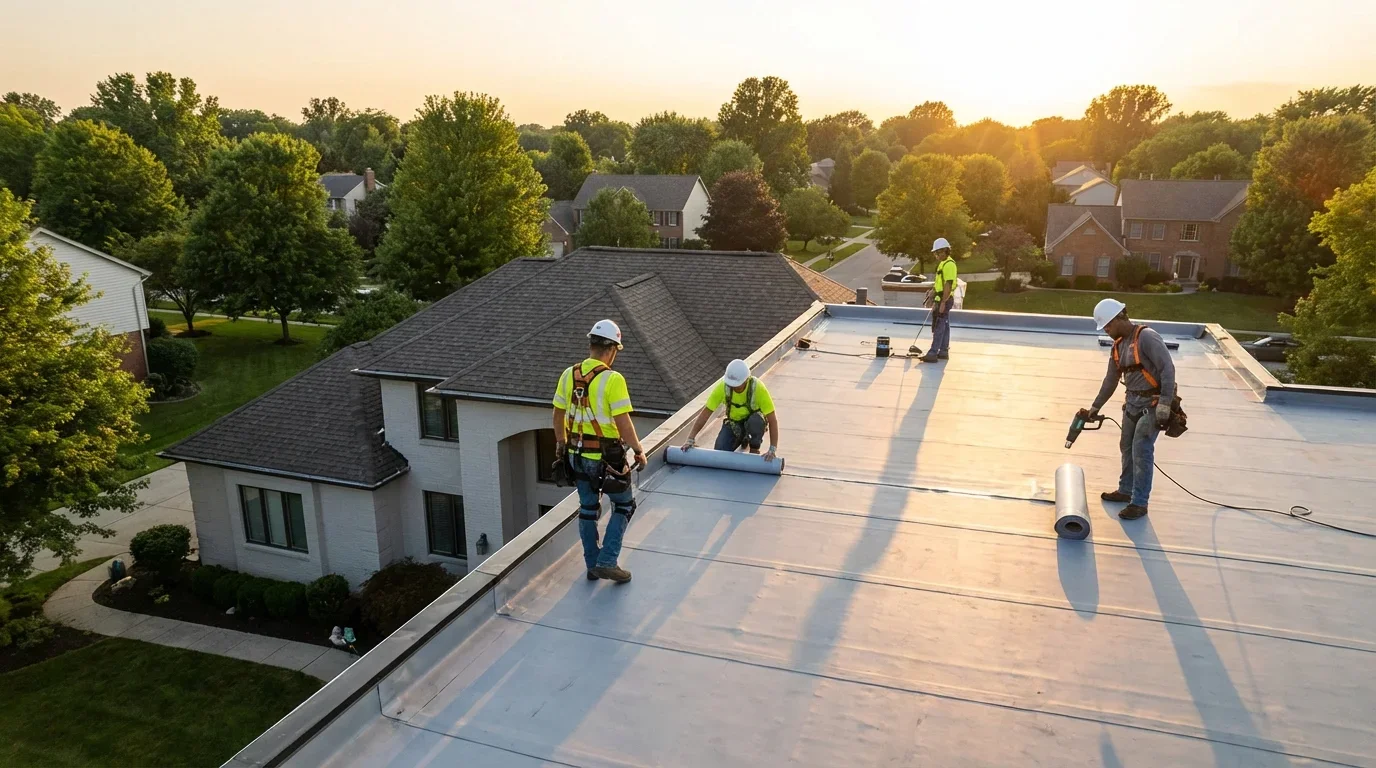
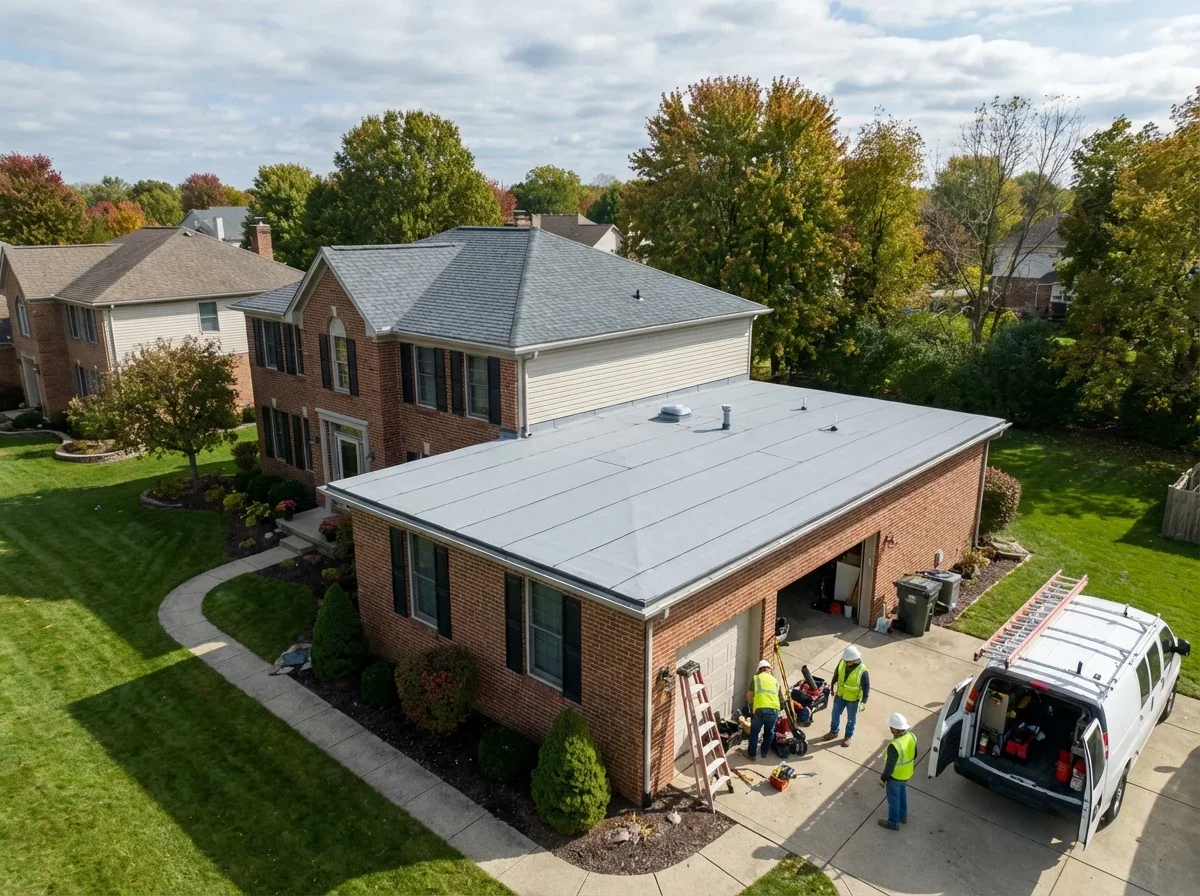
Modern flat and low-slope roofing systems provide reliable, cost-effective protection for commercial buildings and contemporary residential designs throughout Ohio. Our installation expertise spans TPO, EPDM, PVC, modified bitumen, and built-up systems, each offering unique advantages for your application. We ensure proper drainage, insulation, and membrane installation to handle Ohio's weather extremes and deliver long-lasting performance.
Featured Contractors
View all →


When Does Your Commercial Building Need a New Flat Roof?
Your flat roof shows its age differently than a pitched system. Ponding water lasting 48+ hours after rainfall signals drainage failure — a problem that accelerates membrane deterioration across Columbus warehouses and Cleveland retail centers.
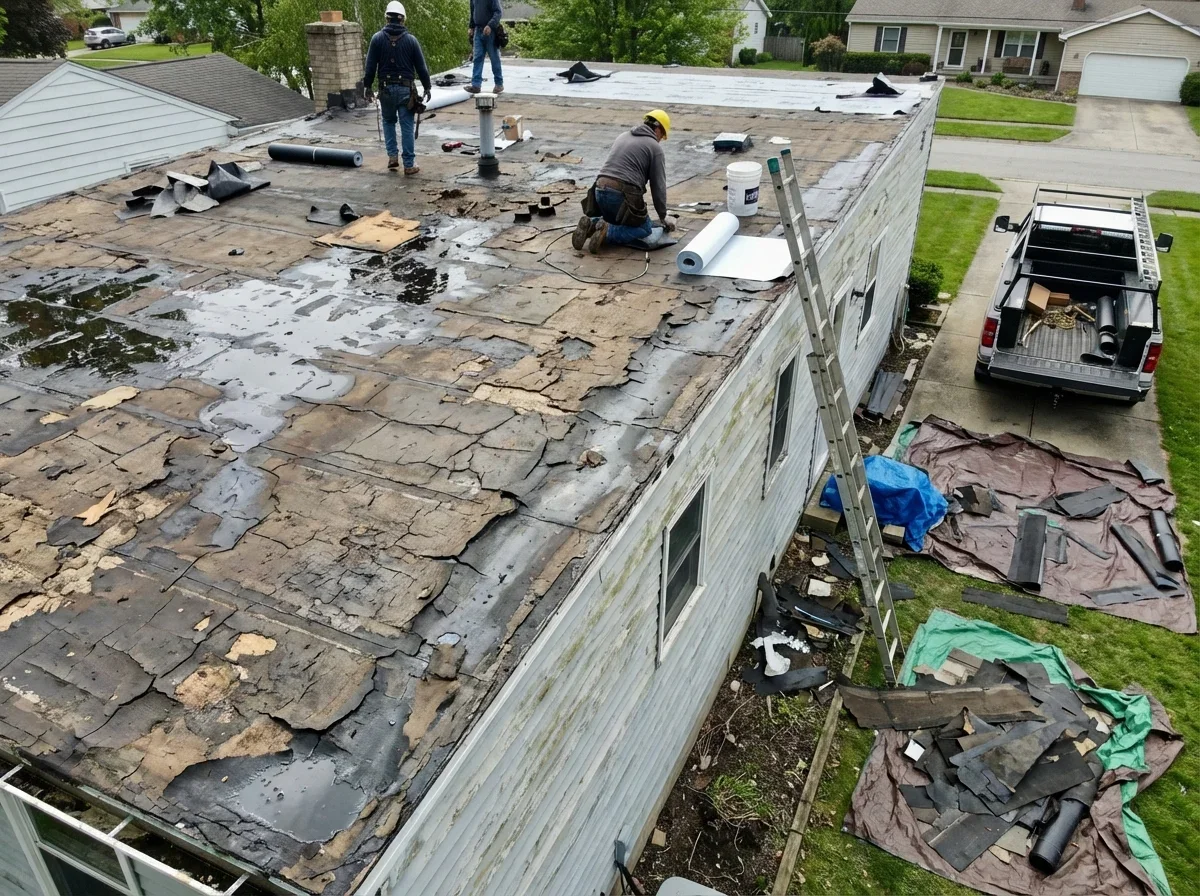
Look for exposed seams where membranes pull apart, blistering or bubbling in the surface, and visible cracks at penetrations around HVAC units. Inside, water stains on ceiling tiles or walls mean the membrane already failed. Increased heating and cooling costs often indicate insulation breakdown beneath the membrane.
Most commercial flat roofs in Ohio need replacement every 15-30 years depending on the membrane type and installation quality. Buildings with heavy rooftop equipment access or poor original drainage planning typically fail faster. Delaying replacement after visible damage compounds costs — what starts as a $50,000 membrane replacement becomes a $150,000 project once water damages roof decking and interior systems.
Timing matters for Ohio's commercial roofing season. Most contractors schedule major installations April through October to avoid temperature limitations on membrane adhesion and seam welding.
What Does Flat Roof Installation Cost in Ohio?
Commercial flat roofing costs vary primarily by membrane selection and building complexity. Here's what to expect for quality installation in Ohio's commercial market:
| Membrane System | Cost Per Square Foot | Typical Lifespan | Best Applications |
|---|---|---|---|
| TPO (White) | $5.00 - $7.00 | 15-30 years | Retail, office buildings, energy efficiency priority |
| EPDM (Rubber) | $4.00 - $8.00 | 20-35 years | Warehouses, manufacturing, budget-conscious projects |
| Modified Bitumen | $6.00 - $12.00 | 10-20 years | High-traffic roofs, areas needing extreme durability |
| PVC Premium | $7.00 - $10.00 | 20-30 years | Restaurants, chemical exposure environments |
Material Cost Breakdown by Membrane Type
These square foot prices include tear-off, new insulation meeting Ohio R-30 requirements, membrane installation, and basic flashing. A typical 20,000 square foot commercial building in Columbus runs $80,000-$140,000 for complete replacement depending on membrane choice.
Installation Variables That Affect Price
Building height and accessibility drive significant cost differences. Single-story warehouse replacements cost substantially less than multi-story office buildings requiring crane access or material hoisting. Rooftop HVAC equipment needing temporary relocation adds $2,000-$8,000 to projects.
Drainage retrofits increase costs when existing roofs lack proper slope. Tapered insulation systems solving ponding problems add $1.50-$3.00 per square foot but prevent premature membrane failure. Buildings requiring structural deck repairs before new roofing see additional costs of $8-$15 per square foot for damaged sections.
Warranty coverage affects pricing. Basic material-only warranties cost less, but labor-and-material warranties from certified contractors (requiring manufacturer-approved installation methods) add 10-15% to project costs while providing better long-term protection. Most commercial property owners in Canton and Youngstown opt for 15-20 year comprehensive warranties on buildings they plan to hold long-term.
The Flat Roof Installation Process
Commercial flat roofing follows a structured sequence — understanding each phase helps you evaluate contractor proposals and project timelines.
Roof Deck Inspection and Preparation
Contractors first determine whether your existing roof allows overlay installation or requires complete tear-off. Most Ohio building codes permit one overlay maximum, so buildings with two existing membrane layers need full removal to the deck. The structural deck gets inspected for rot, rust (on metal decks), or deterioration requiring repair before new roofing begins.
Insulation and Drainage Planning
Ohio commercial buildings require minimum R-30 insulation for flat roofs under current energy codes. Contractors install rigid foam insulation boards in layers, staggering seams for thermal performance. Proper drainage design creates minimum 1/4-inch per foot slope using tapered insulation systems — preventing the ponding water that plagues poorly designed flat roofs across Akron and Dayton industrial buildings.
Membrane Installation and Seaming
Installation method depends on membrane type. TPO and PVC membranes use heat-welded seams, creating watertight bonds stronger than the sheet itself. EPDM typically uses adhesive or mechanical fastening with taped seams. Modified bitumen requires torch application or hot mopping. Most commercial installations in Cincinnati and Toledo take 3-10 days depending on square footage and complexity.
Edge Details and Penetration Flashing
The roof's perimeter and all penetrations (HVAC units, vents, drains) receive custom flashing. Metal edge details protect membrane edges from wind uplift — critical for Ohio's wind zones where improper edge detailing causes catastrophic failures during storms.
How to Choose a Commercial Flat Roofing Contractor
Commercial flat roofing demands specialized expertise beyond residential work. Use this checklist to separate qualified contractors from general roofers attempting commercial projects:
Questions to Ask Every Contractor:
- How many commercial flat roofs over 10,000 square feet have you installed in the past 24 months?
- Which membrane manufacturers have certified your crews for warranty-eligible installation?
- Can you provide references from similar building types (retail, warehouse, office) in Ohio?
- What's your approach to drainage planning and tapered insulation systems?
- How do you handle occupied building installations to minimize business disruption?
- What project management systems track progress and communicate with property managers?
Manufacturer Certifications and Warranties
Certified contractors complete factory training for specific membrane systems. GAF, Firestone, Johns Manville, and Carlisle certifications indicate proven installation capability and unlock extended manufacturer warranties impossible to obtain otherwise. Ask to see current certification documentation — these expire and require renewal.
Red Flags Indicating Unqualified Contractors:
- Inability to explain the difference between mechanically-attached and fully-adhered systems
- Proposing overlay installation without deck inspection
- No references from commercial projects of similar size and type
- Pressure to choose cheapest membrane without discussing building-specific needs
- Missing commercial general liability insurance with aggregate limits below $2 million
Ohio requires commercial roofing contractors to carry proper licensing and maintain adequate insurance covering commercial property damage. Verify coverage before signing contracts — your building's value demands protection beyond basic residential insurance policies.
Frequently Asked Questions
Related Articles
Need Help With Your Project?
Join 500+ homeowners we've helped