

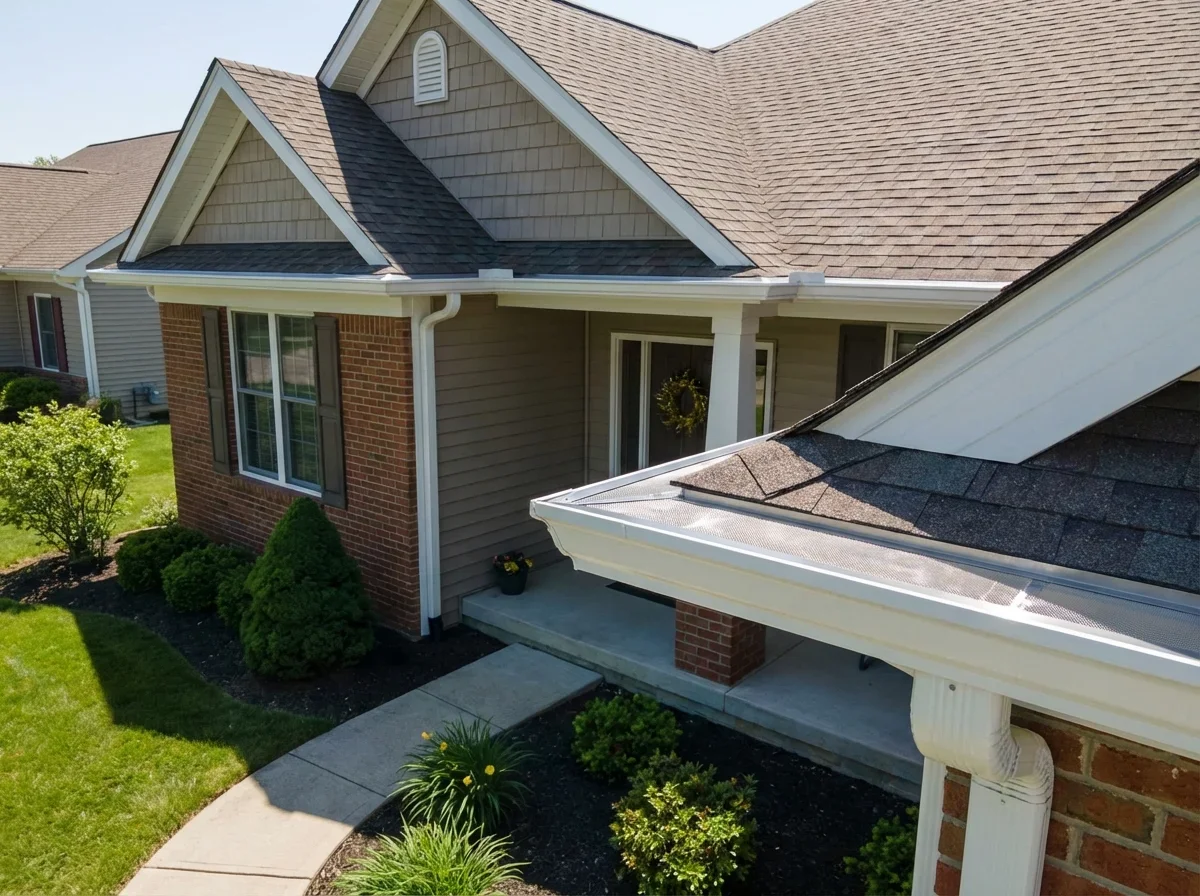
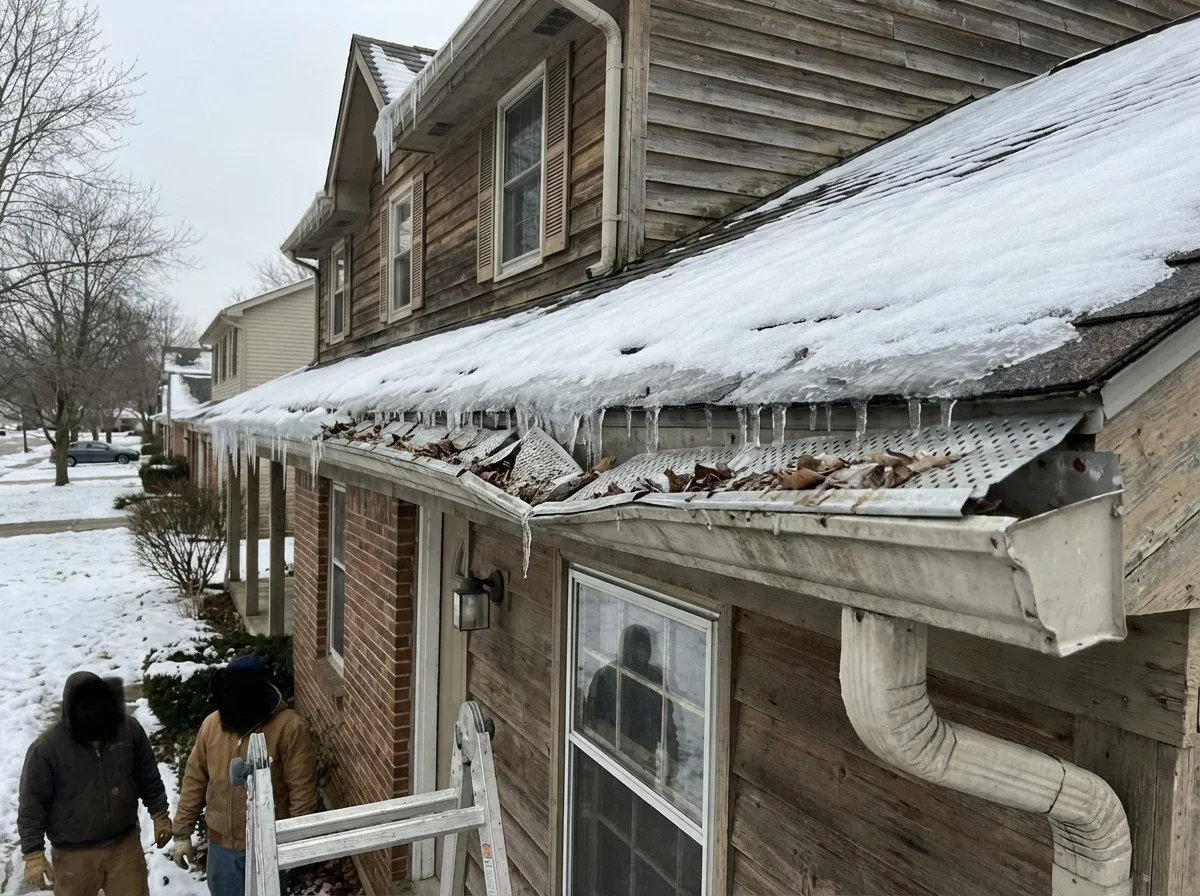
Professional gutter guards eliminate dangerous ladder climbs and reduce maintenance while protecting your Ohio home from clogged gutters, ice dams, and water damage. Modern gutter protection systems handle heavy rainfall, filter debris, and prevent nesting pests while maintaining proper water flow. We install proven gutter guard solutions that perform reliably through Ohio's changing seasons and challenging weather conditions.
Featured Contractors
View all →




When Gutter Guards Make Sense in Ohio
You know it's time when you're clearing gutters more than twice a year. Ohio's maple and oak canopy drops heavy leaf loads in fall, while spring cottonwood seeds and helicopter seeds clog systems by June.
Unprotected gutters create cascading problems. Water overflows onto fascia boards, rotting wood and creating ice dams in winter. Foundation splash-back erodes soil around basement walls. Mosquitoes breed in standing water trapped by debris.
Two-story homes in wooded neighborhoods around Columbus and Cleveland face the highest maintenance burden. Ranch homes with mature trees overhead still need protection — lower roof pitch makes DIY cleaning more dangerous than it looks.
Gutter guards pay off fastest when:
- Trees overhang your roofline
- You clean gutters 3+ times yearly
- Ice dams form along your eaves in winter
- You've experienced fascia rot or basement seepage
- Hiring cleaners costs $150-300 per visit
The right system eliminates 90% of gutter maintenance. You'll still need occasional inspection, but debris removal becomes a quick brush-off instead of a full scoop-and-haul.
What Does Gutter Guard Installation Cost in Ohio?
Expect to pay $1,200 to $3,800 for a full gutter guard system on an average Ohio home with 150-200 linear feet of gutters. Material choice drives the cost range.
Material Cost Breakdown
| Material Type | Cost Per Linear Foot | Durability | Best For |
|---|---|---|---|
| Aluminum Mesh | $7-12 | 15-20 years | Budget-conscious, moderate leaf load |
| Stainless Micro-Mesh | $15-25 | 20-30 years | Heavy debris, pine needles, long-term investment |
| Reverse-Curve (Plastic) | $8-14 | 10-15 years | Surface water handling, moderate trees |
| Reverse-Curve (Aluminum) | $12-20 | 20-25 years | High-flow areas, ice dam prevention |
| Foam Inserts | $3-6 | 2-4 years | DIY temporary solution |
| Brush Guards | $4-8 | 3-5 years | Light leaf load, budget option |
Stainless micro-mesh dominates installations in Cincinnati and Dayton for good reason — fine mesh blocks shingle grit and small seeds while handling Ohio's freeze-thaw cycles without warping.
Labor and Complexity Factors
Installation labor runs $3-8 per linear foot depending on:
- Roof pitch: Steep roofs (8/12 pitch or greater) require safety harnesses and increase labor 30-40%
- Gutter condition: Realignment, hanger replacement, or fascia repair adds $200-600
- Story height: Two-story homes cost 25-35% more than ranch installations
- Accessibility: Tight spaces, landscape obstacles, or difficult ladder placement slow work
Most contractors include a 10-year labor warranty. Material warranties range from 5 years (foam/brush) to lifetime (premium micro-mesh systems). Transferable warranties add resale value.
Annual cleaning costs without guards: $150-300 per visit, twice yearly = $300-600 annually. Guards pay for themselves in 4-7 years through eliminated cleaning costs alone.
The Gutter Guard Installation Process
Professional installation takes one to two days for most homes, depending on linear footage and roof complexity. Here's what actually happens.
Gutter Inspection and Prep
Installers assess existing gutter condition first. Sagging sections get realigned, loose hangers tightened, and leaks sealed. Gutter guards don't fix underlying problems — they protect functional systems from debris buildup.
They measure pitch and check downspout flow. Systems installed on improperly pitched gutters still overflow because water can't reach outlets fast enough. Most contractors adjust pitch during installation to ensure proper drainage.
System Fitting and Attachment
Installation method varies by product type:
| System Type | Attachment Method | Roof Impact |
|---|---|---|
| Mesh/Micro-Mesh | Clips under shingles or screws to fascia | Minimal — no shingle removal |
| Reverse-Curve | Slides under shingles, secures to gutter lip | Slight — lifts first shingle row |
| Foam/Brush Inserts | Drops into gutter trough | None — no roof contact |
Professional installers cut guards to exact gutter dimensions, fitting around corners and downspout outlets. They overlap sections properly to prevent debris infiltration at seams.
Testing and Adjustments
Installers run water tests to verify flow through guards and into downspouts. They check for standing water, adjust guard angles if needed, and ensure debris sheds off the edge rather than accumulating on top.
Timeline expectations: Ranch homes (100-150 linear feet) typically complete in 4-6 hours. Two-story homes with complex rooflines take 8-12 hours spread across two days.
How to Choose a Gutter Guard Contractor
Not all installations perform equally. The difference comes down to product selection and installation precision.
Questions to Ask
- What gutter guard systems do you install, and why do you recommend [specific product] for my home? Avoid contractors pushing one brand without comparing options to your tree coverage and roof type.
- Will you inspect and repair my existing gutters before installation? Guards installed over sagging or leaking gutters waste money.
- What's included in your labor warranty? Look for 10+ years covering attachment failures and guard displacement.
- How do you handle corners, valleys, and downspout areas? These are leak-prone spots requiring custom fitting.
- Do you provide flow testing after installation? Water should drain freely without pooling.
- Can I see examples of installations on homes similar to mine? Product performance varies by roof pitch and tree coverage.
Installation Quality Indicators
- Guards sit flush against shingles with no gaps where debris enters
- All sections overlap properly in the direction of water flow
- Fasteners are corrosion-resistant (stainless or coated)
- Guards don't void roofing warranty (shingle-mounted systems require careful lifting)
Red Flags
- Pressure to choose the most expensive system without explaining why cheaper options won't work for your specific situation
- No written warranty documentation
- Unwillingness to adjust gutter pitch as part of installation
- DIY-grade products sold as professional systems
Ohio doesn't require specialized licensing for gutter work, but reputable contractors carry general liability insurance and workers' compensation. Compare at least three estimates focusing on material quality and warranty coverage, not just price.
Frequently Asked Questions
Related Articles
Need Help With Your Project?
Join 500+ homeowners we've helped