
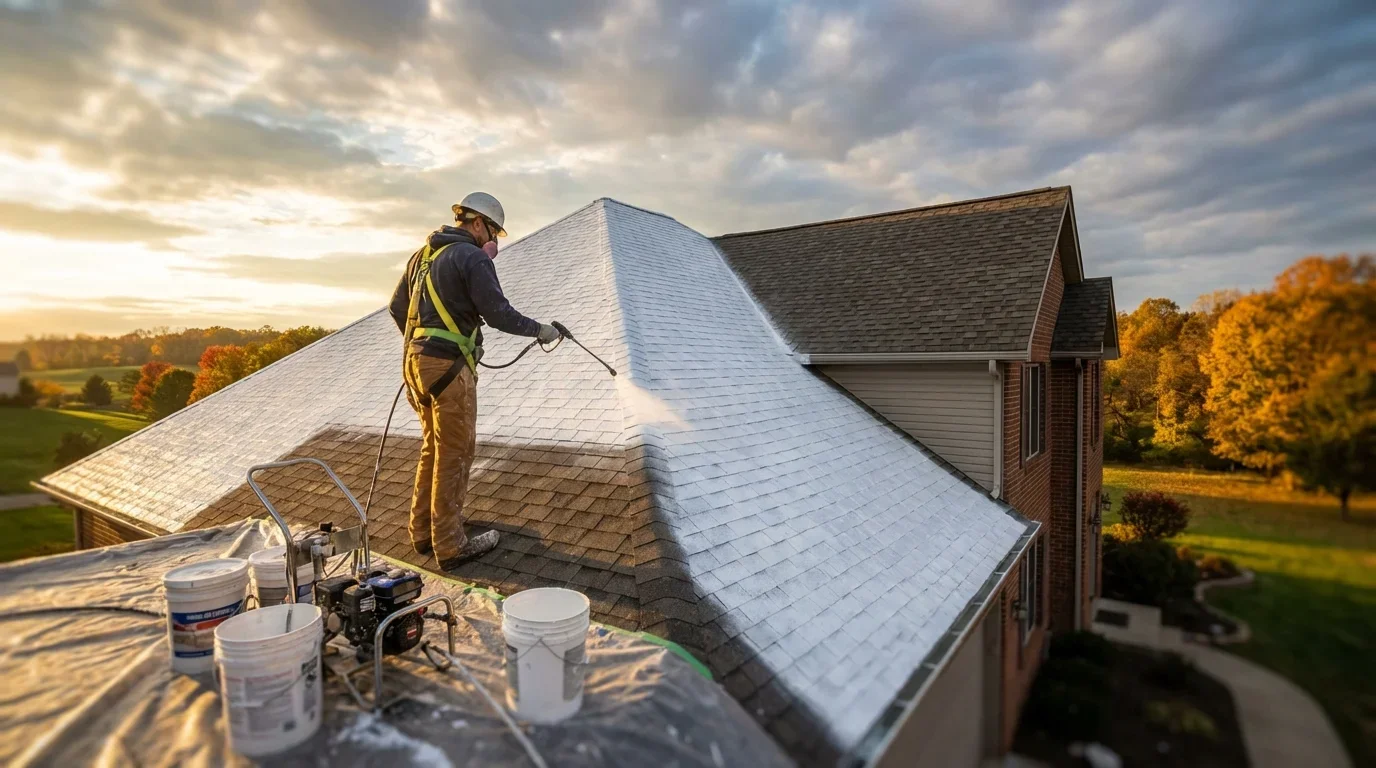
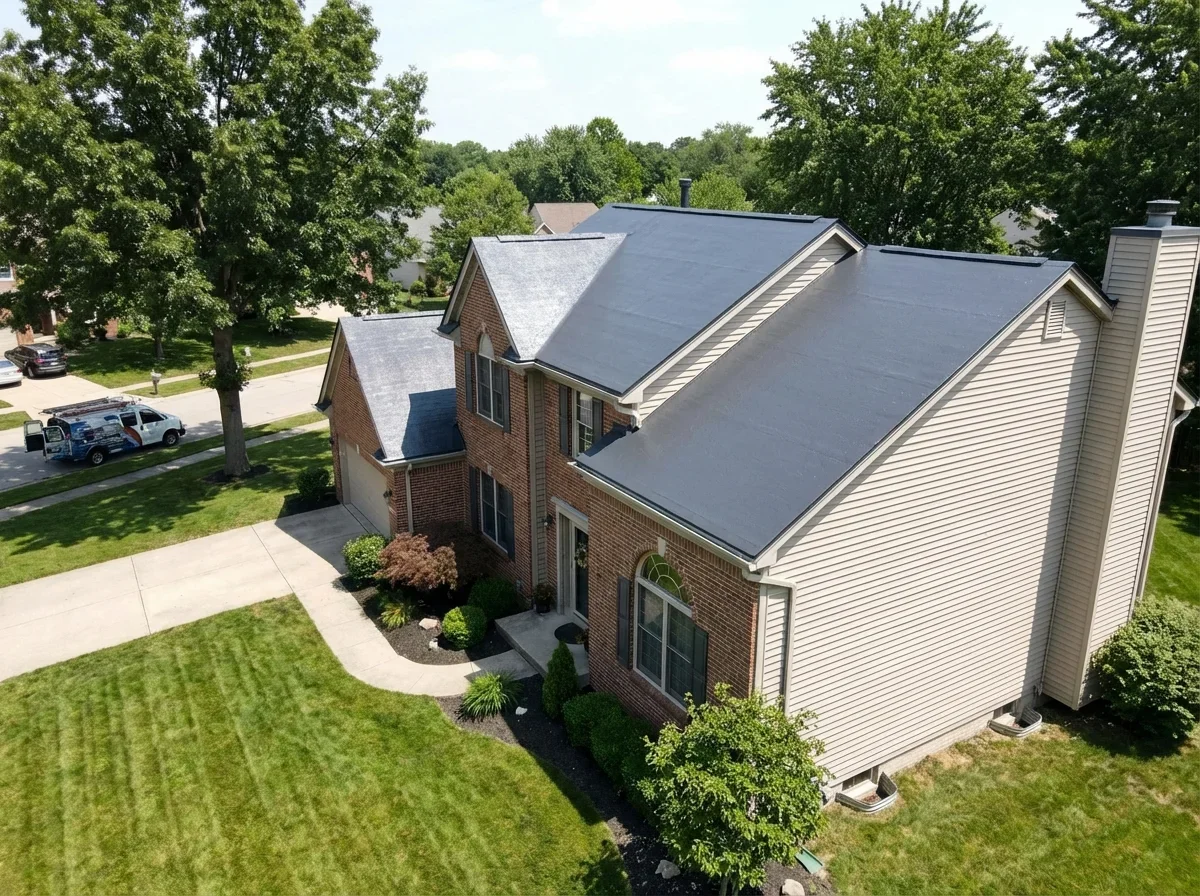
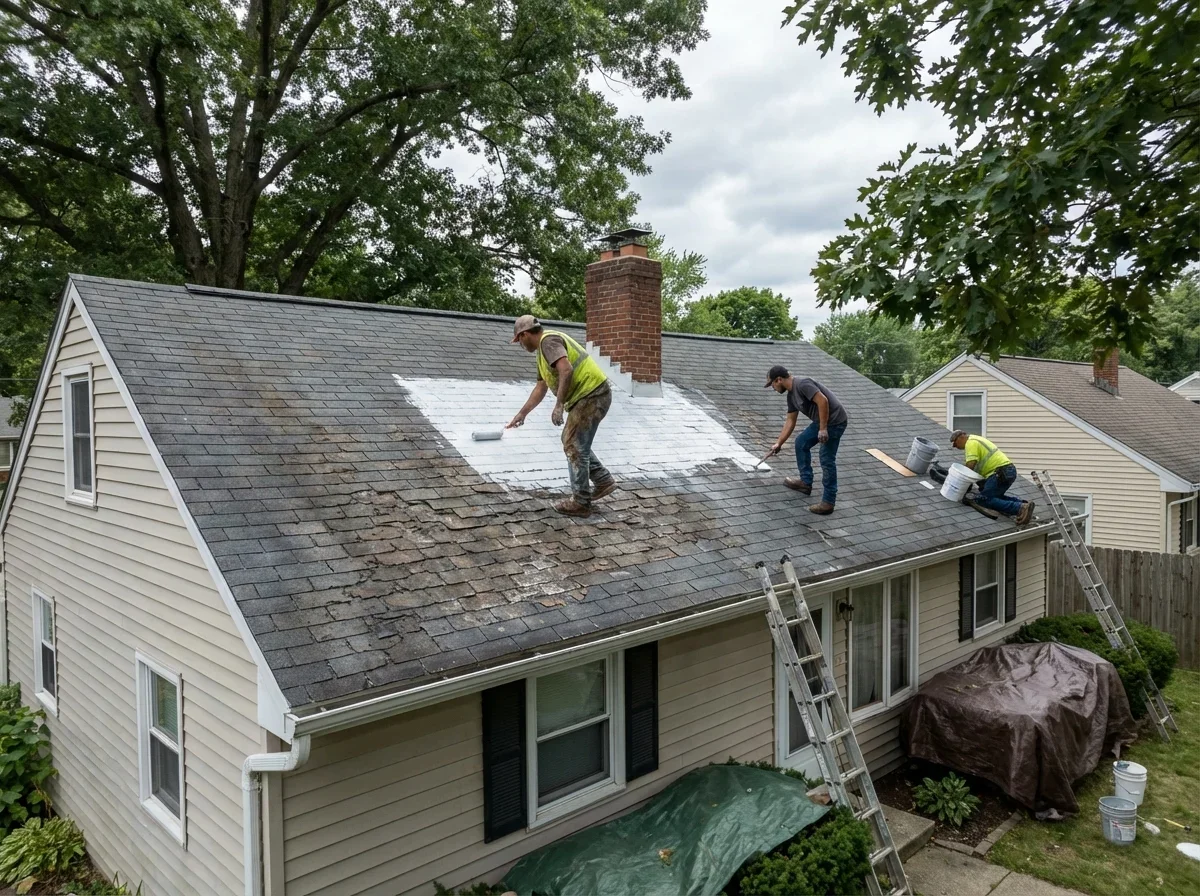
Roof coating systems restore and protect aging commercial roofs at a fraction of replacement cost while improving energy efficiency and extending service life 10-20 years. Our commercial coating solutions include silicone, acrylic, and polyurethane formulations tailored to your roof type and Ohio climate conditions. Professional application seals leaks, reflects sunlight, and provides a seamless, watertight membrane that rejuvenates existing roofing systems.
Featured Contractors
View all →


When Roof Coating Makes Financial Sense
You're looking at coating because replacement quotes feel excessive. That instinct is often correct. If your roof membrane shows aging but the decking and insulation remain sound, coating delivers another 15 years at 25-30% the cost of tear-off and replacement.
Ideal candidates for coating:
- Flat or low-slope commercial roofs (TPO, EPDM, modified bitumen, metal)
- Minor ponding water that drains within 48 hours
- Seams and flashings that can be repaired before coating
- No widespread rot, structural damage, or saturated insulation
Energy savings start immediately. White reflective coatings reduce rooftop temperatures by 50-80°F in Ohio summers, cutting HVAC loads 20-30% in buildings like warehouses in Canton or retail centers in Akron.
Poor candidates: roofs with extensive ponding (standing water beyond 72 hours), delaminated layers throughout, or compromised structural decking. Those need replacement, not restoration.
Ohio's freeze-thaw cycles accelerate membrane deterioration. Coating before cracks expand prevents water infiltration that turns minor repairs into $200,000 replacement projects.
What Does Commercial Roof Coating Cost in Ohio?
Most Ohio commercial roof coating projects run $1.50 to $4.00 per square foot, including surface prep, repairs, and two-coat application. A 15,000 sqft retail building in Toledo costs $22,500-$60,000 depending on coating type and roof condition.
Cost by Coating Type
| Coating System | Cost per Sqft (Materials + Labor) | Best Application |
|---|---|---|
| Acrylic | $1.50 - $2.25 | Budget-friendly, moderate traffic roofs |
| Silicone | $2.50 - $3.50 | Ponding water areas, high UV exposure |
| Polyurethane | $3.00 - $4.00 | High foot traffic, impact resistance |
| Elastomeric | $2.00 - $3.00 | Metal roofs, expansion/contraction needs |
Roof Size and Condition Factors
Square footage drives base cost, but condition determines total expense. A well-maintained 20,000 sqft warehouse coating costs $50,000. The same building with extensive seam repairs, flashing replacement, and multiple penetrations runs $75,000-$85,000.
Key cost variables:
- Existing membrane type: Smooth TPO coats easily; heavily-granulated modified bitumen requires more material
- Repair scope: Seam welding, flashing replacement, and drain modifications add $8-$15/sqft in those areas
- Access complexity: Buildings in downtown Cincinnati or Cleveland with restricted crane access increase labor 15-25%
- Warranty tier: 10-year manufacturer warranties cost less than 15- or 20-year NDL (no-dollar-limit) warranties
ROI timeline: 3-5 years. Energy savings average $0.15-$0.30/sqft annually. A coated 30,000 sqft roof saves $4,500-$9,000/year in cooling costs while delaying a $300,000+ replacement for 15 years.
Ohio commercial properties qualify for IRS Section 179D energy tax deductions (up to $1.80/sqft) when reflective coatings meet ASHRAE 90.1 standards. Columbus office buildings and Akron manufacturing facilities frequently capture $15,000-$40,000 in first-year deductions.
The Roof Coating Application Process
Surface Preparation and Repairs
Contractors pressure-wash the existing membrane to remove dirt, algae, and loose granules. They identify and repair damaged seams, flashings, and penetrations—coating won't fix structural problems, it seals and protects what's already there.
This prep phase determines coating success. Proper adhesion requires clean, dry surfaces. In Columbus and Cleveland, scheduling matters: application needs three consecutive dry days with temperatures above 50°F, limiting work windows to May through September for water-based acrylics.
Application and Curing Timeline
- Primer coat (if required by coating type and substrate)
- First base coat at manufacturer-specified thickness (10-20 mils wet)
- Reinforcement fabric embedded at seams, drains, and transitions
- Second base coat for full mil thickness and warranty compliance
- Topcoat (silicone systems) for UV and weather resistance
Total application time: 2-5 days for most commercial buildings, depending on square footage and complexity. A 20,000 sqft warehouse in Dayton typically completes in 3 days with good weather.
Curing takes 24-72 hours between coats. Full cure reaches 7-14 days—foot traffic allowed after 48 hours, but avoid equipment loads for two weeks.
| Coating Type | Application Method | Cure Time Between Coats |
|---|---|---|
| Silicone | Spray or roller | 24 hours (moisture-insensitive) |
| Acrylic | Spray preferred | 24-48 hours (requires dry conditions) |
| Polyurethane | Spray (base coat) | 4-6 hours (fast cure) |
How to Choose a Roof Coating Contractor
Questions to Ask
- Which coating system do you recommend for my specific roof membrane and why? (Acrylic doesn't adhere well to silicone; polyurethane works best on high-traffic roofs)
- What manufacturer certifications does your crew hold? (GAF, Tremco, Garland, or Carlisle training matters for warranty validity)
- What's included in surface preparation? (Pressure washing, minor repairs, seam reinforcement should be standard)
- How do you handle unforeseen substrate damage discovered during prep? (Get change-order pricing in writing before work starts)
- What warranty do you offer, and what does it cover? (Labor and material vs. material-only makes a $20,000 difference on failures)
- How do you verify proper mil thickness during application? (Wet film thickness gauges ensure warranty compliance)
Red Flags to Avoid
- Coating over obvious ponding water without drainage correction—coating won't fix structural slope problems
- Applying single coats to meet budget instead of manufacturer specs (voids warranties, fails early)
- No proof of manufacturer approval to install their warranty products
- Pressure to coat in marginal weather (temperatures below 50°F, rain in forecast within 24 hours)
Ohio requires roofing contractors to carry general liability insurance ($1M minimum) and workers' compensation. Request certificates before signing contracts. Manufacturers void warranties when uncertified contractors apply their products.
Compare at least three detailed quotes that break out prep work, coating materials, labor, and warranty terms separately. The lowest bid often skips critical prep steps that cause coating failure within 3-5 years.
Frequently Asked Questions
Related Articles
Need Help With Your Project?
Join 500+ homeowners we've helped