
Quality siding installation protects your Ohio home from weather extremes while dramatically improving curb appeal and energy efficiency. From vinyl and fiber cement to engineered wood and steel options, we install siding systems designed to withstand Ohio's temperature swings, moisture, and wind. Our full-service approach includes proper moisture barriers, insulation upgrades, and seamless integration with your roofing system.
Featured Contractors
View all →




When Do You Need Siding Replacement?
Repair makes sense for isolated damage — a cracked vinyl panel after a storm, a single warped board. But full replacement becomes the smarter move when problems multiply or your siding has simply aged out.
Watch for these replacement indicators:
- Widespread warping or buckling across multiple walls (especially on south and west exposures that take the most sun)
- Soft spots or punky wood beneath existing siding when you press on it
- Mold or mildew growth that returns shortly after cleaning
- Peeling paint every 3-4 years on wood siding (the substrate is failing)
- Energy bills creeping up without explanation (failing siding compromises insulation)
- Original siding from 1990s or earlier — vinyl formulations and installation methods have improved significantly
Ohio's freeze-thaw cycles accelerate deterioration. Water infiltrates small cracks, freezes, expands, and splits materials apart. One cold winter can turn minor issues into major problems. In Columbus and Cleveland especially, moisture management is everything — siding is your home's raincoat.
Siding failure shows up on the inside. By the time you see water stains on drywall or smell mold in wall cavities, moisture has been infiltrating for months.
What Does Siding Installation Cost in Ohio?
Full siding replacement on a typical 2,000-square-foot two-story home runs $12,000-$28,000 depending on material choice and complexity. Ranch homes cost less; homes with dormers, turrets, or extensive trim cost more.
Cost by Material Type
| Material | Cost per Sq Ft Installed | Lifespan | Maintenance |
|---|---|---|---|
| Vinyl | $6-$9 | 20-30 years | Wash annually |
| Fiber Cement | $9-$14 | 30-50 years | Repaint every 10-15 years |
| Engineered Wood | $7-$11 | 25-35 years | Stain/seal every 5-7 years |
| Cedar/Wood | $10-$16 | 20-40 years | Stain/seal every 3-5 years |
Vinyl dominates Ohio installations — affordable, durable, and low-maintenance. Columbus and Cincinnati see growing fiber cement adoption for its fire resistance and dimensional stability in humidity.
Factors That Affect Your Total Price
- Home size and height: Second-story work requires scaffolding (adds $1,500-$3,000)
- Existing siding removal: Disposal of old materials runs $1-$2 per square foot
- Sheathing repairs: Replacing rotted OSB costs $50-$80 per sheet plus labor
- Insulation upgrades: Foam-backed vinyl or separate rigid foam adds $2-$4/sqft
- Trim complexity: Elaborate cornices, gables, and architectural details increase labor
Insurance rarely covers siding replacement unless storm damage is documented. Warranties vary widely: vinyl typically carries 25-year to lifetime manufacturer coverage (prorated); fiber cement offers 30-50 years; installation labor warranties run 1-10 years depending on contractor.
Property value return: Siding replacement recoups approximately 75-85% of cost at resale in Ohio markets. Fiber cement and quality vinyl installations offer the strongest returns in Dayton and Canton neighborhoods with active turnover.
The Siding Installation Process
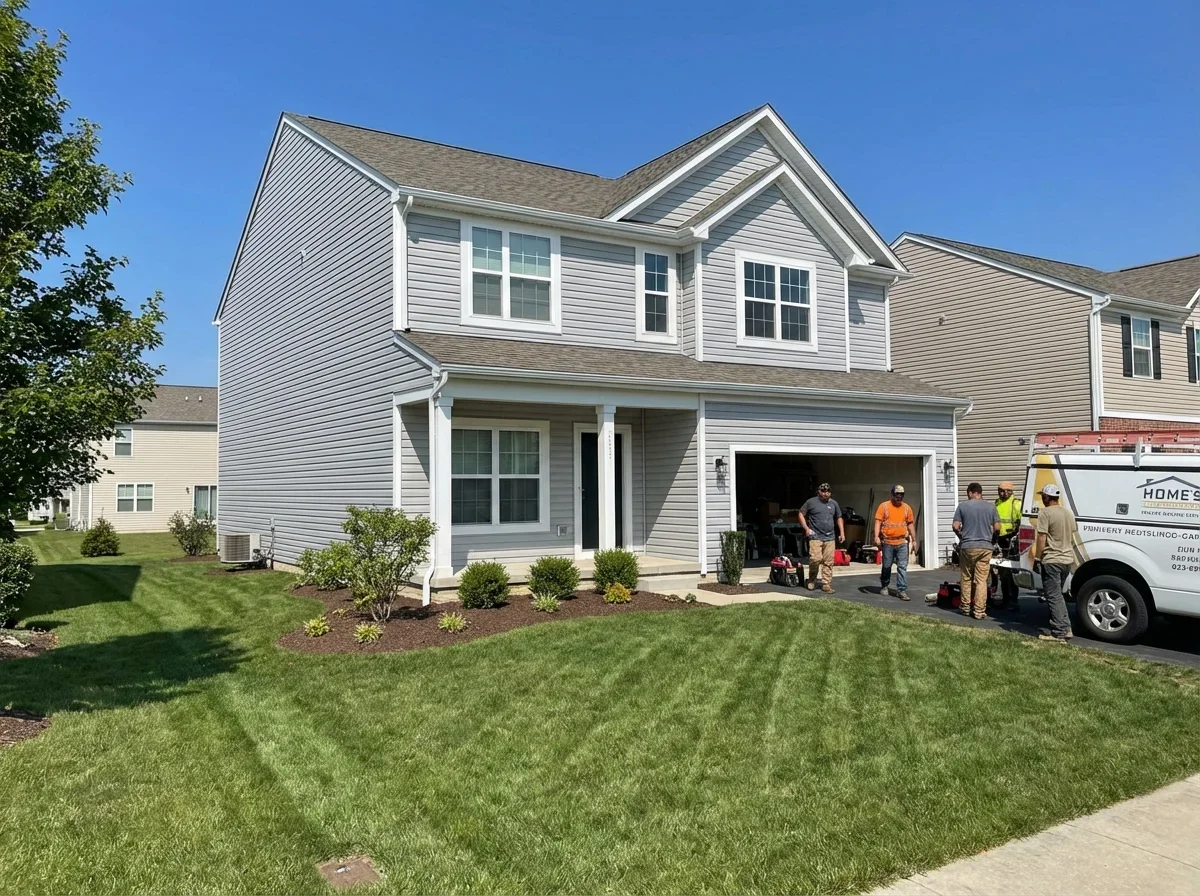
Most full siding replacements on an average Ohio home take 5-7 days from tear-off to final trim. Larger homes or complex architectural details extend this. Weather delays are common in spring and fall.
Inspection and Tear-Off
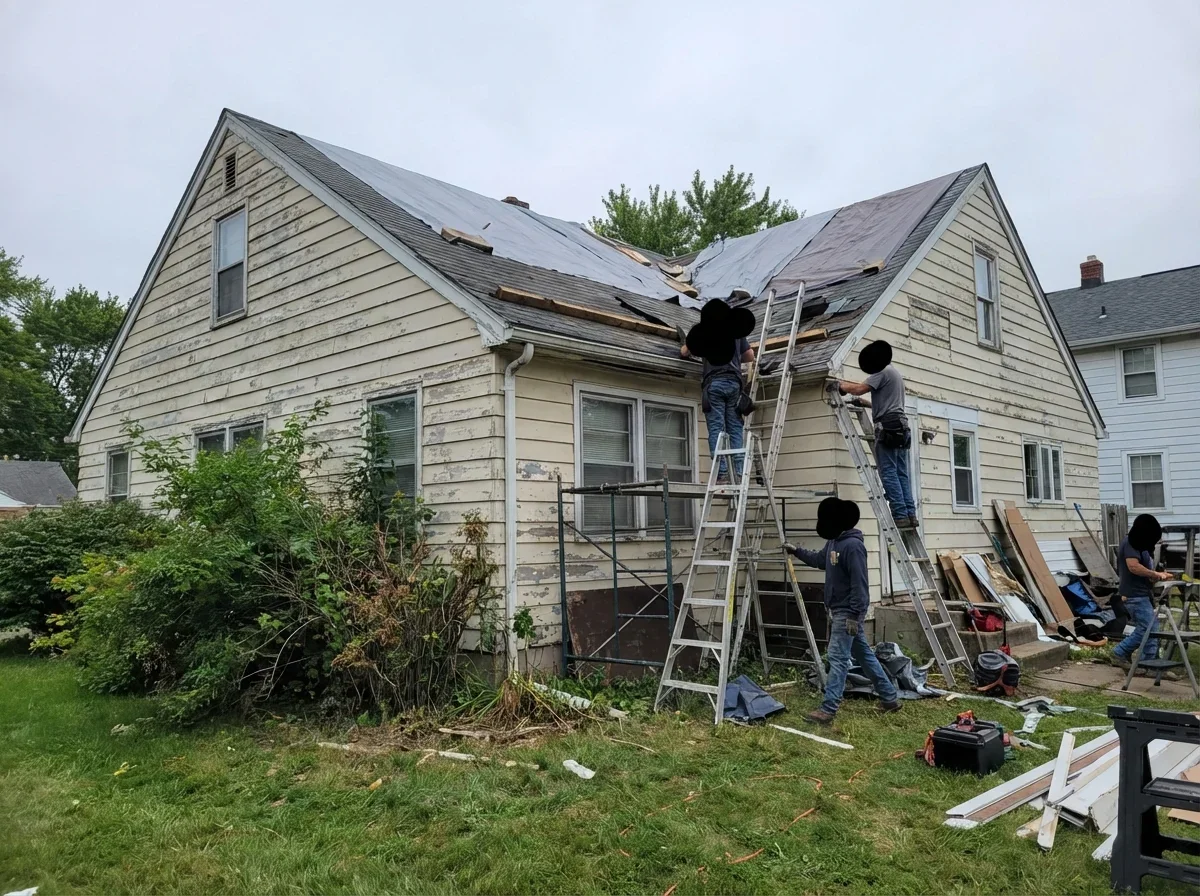
Contractors inspect the existing structure for rot, compromised sheathing, or water damage before removing old siding. Any damaged OSB or plywood gets replaced. This discovery phase sometimes reveals hidden problems — budget for potential repairs.
Moisture Barrier and Insulation
A weather-resistant barrier (housewrap like Tyvek) goes over sheathing before siding. This layer sheds water while allowing vapor to escape. Many Ohio homeowners add rigid foam insulation beneath the siding for R-value gains — particularly effective with vinyl installations.
Siding Application and Trim Work
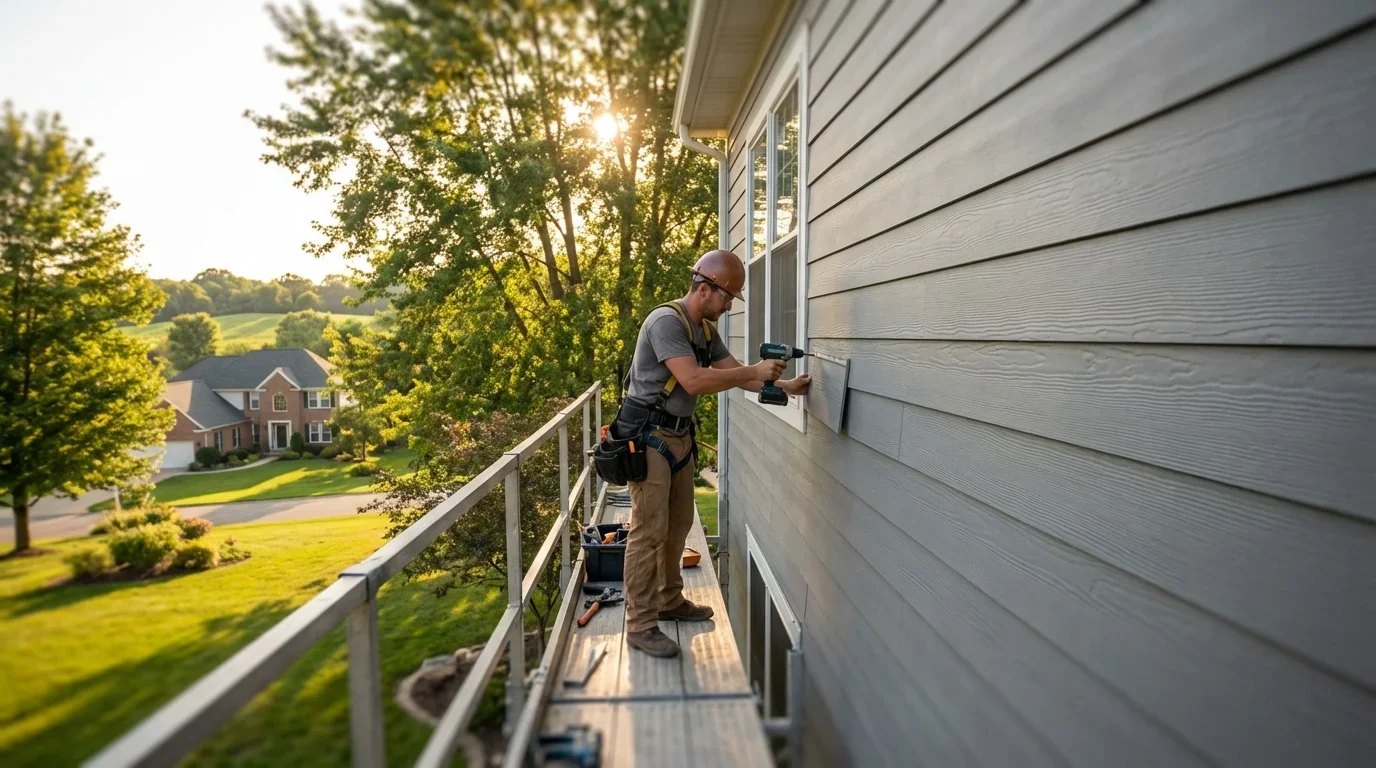
Panels or planks install from bottom to top with specific fastening patterns (vinyl requires expansion gaps; fiber cement demands precise nailing). Trim, corners, and J-channels frame windows and doors. Quality installations include proper flashing at all penetrations — skylights, exhaust vents, hose bibs.
Ohio-specific considerations: Installation can't happen below 40°F for most vinyl products (material becomes brittle). Fiber cement has fewer temperature restrictions but requires covered work areas during rain. Plan spring or summer installations in Toledo, Akron, or Youngstown where lake-effect weather complicates scheduling.
How to Choose a Siding Contractor in Ohio
Ohio doesn't require state-level contractor licensing for siding work, but municipalities often do. Verify local requirements and never skip insurance verification.
Questions to Ask Before Hiring
- Which manufacturer certifications do you hold? (CertainTeed, James Hardie, Mastic installers receive training on product-specific methods)
- How do you handle moisture barriers and flashing? (Ask them to describe the process — vague answers are red flags)
- What's included in your warranty? (Separate manufacturer product warranty from contractor installation warranty)
- Can I see recent local projects? (Inspect completed work in person, talk to homeowners)
- How do you protect landscaping and windows during tear-off? (Shows attention to detail)
- What's your plan if we discover rotted sheathing? (Get repair costs and timeline impact in writing upfront)
Insurance and Warranty Coverage
Require proof of general liability ($1M minimum) and workers' compensation. Reputable contractors carry both and provide certificates without hesitation. Installation warranties should cover workmanship defects for at least 5 years.
Red Flags to Avoid
- Requiring large deposits (more than 25% upfront suggests cash flow problems)
- No written contract specifying materials, timeline, and change order process
- Pressure to decide immediately or limited-time pricing gimmicks
- Cash-only pricing (legitimate businesses accept standard payment methods)
Comparing 3-4 local contractors gives you pricing context and helps identify outliers — extremely low bids often mean cut corners on moisture barriers or fastening schedules.
Frequently Asked Questions
Related Articles
Need Help With Your Project?
Join 500+ homeowners we've helped