
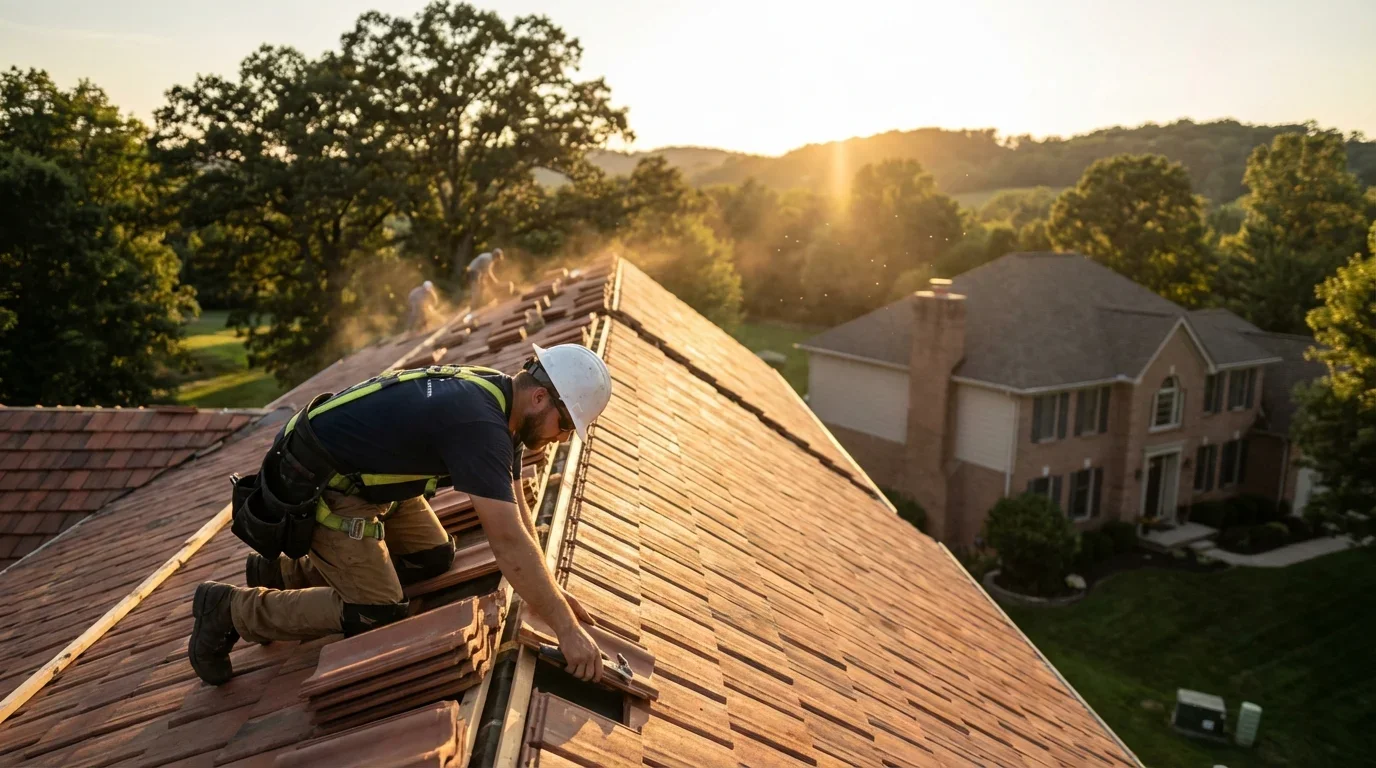
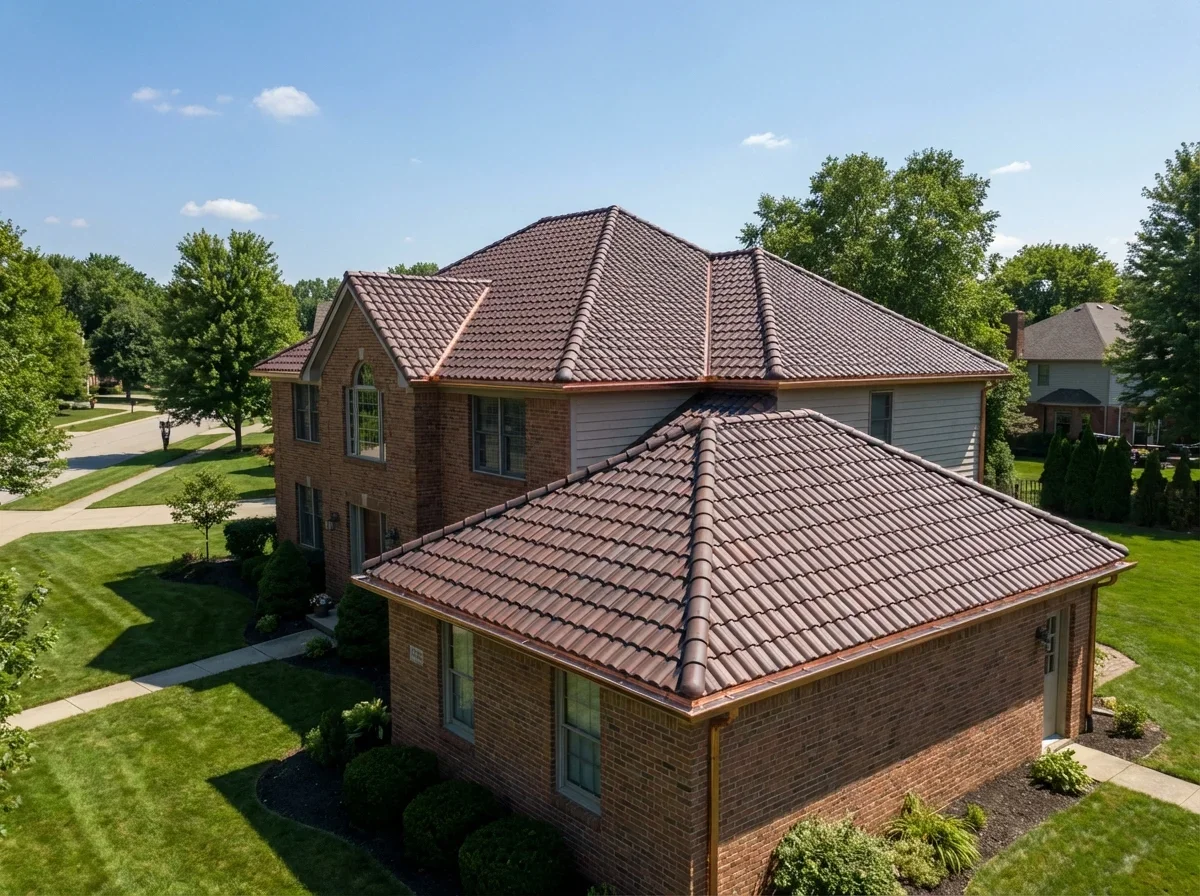
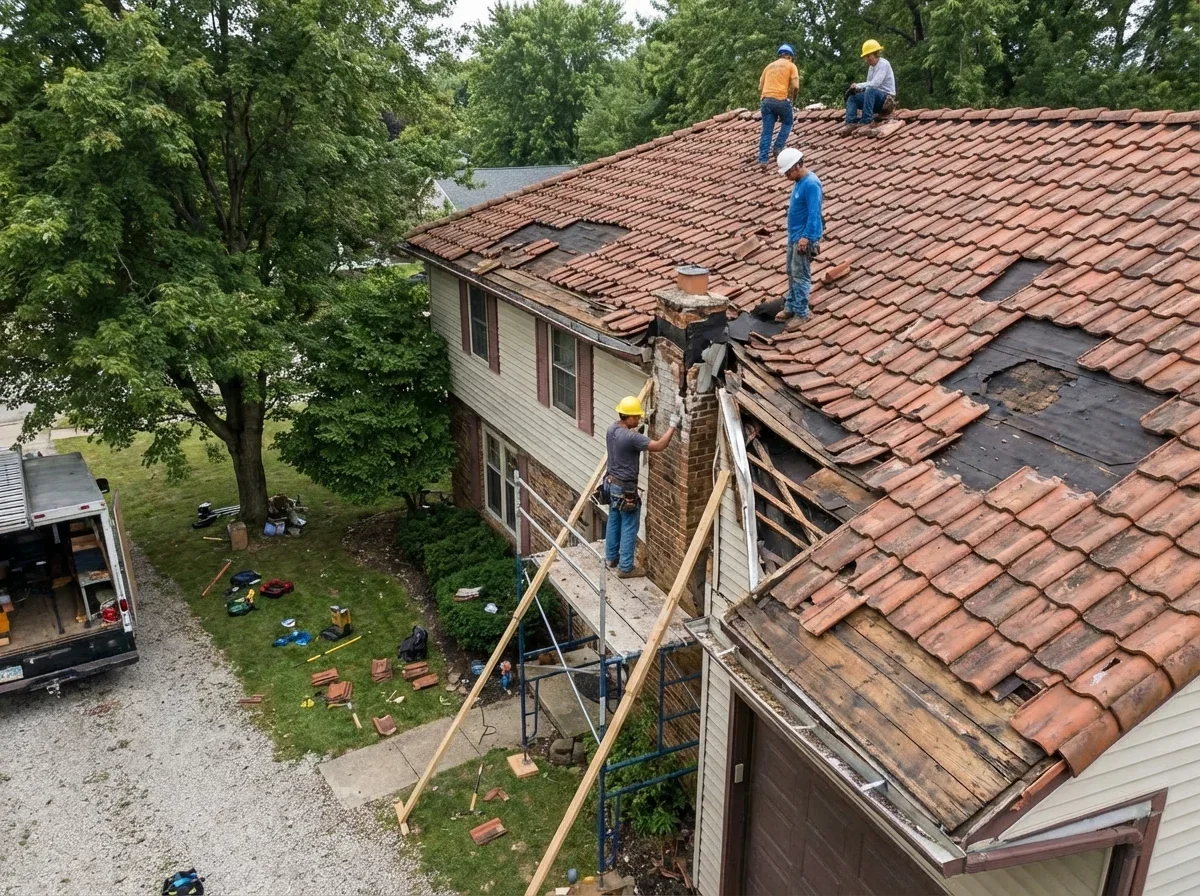
Tile roofing delivers exceptional durability, fire resistance, and distinctive Mediterranean or Spanish-style aesthetics that set your Ohio home apart. Clay and concrete tiles can last 50-100 years, withstand extreme weather, and provide excellent insulation properties. Our specialized installers ensure proper underlayment, battening, and fastening techniques to handle Ohio's freeze-thaw cycles and heavy snow loads while maintaining the roof's visual appeal.
Featured Contractors
View all →




When Tile Roofing Makes Sense for Your Ohio Home
Tile roofing isn't for every house or every budget. Most Ohio homes need structural reinforcement before they can safely support 850-950 pounds per square of tile — compared to 250 pounds for asphalt.
The decision comes down to three factors: your home's structural capacity, your budget for the premium (both material and modification costs), and your timeline. Homes in established Columbus and Cleveland neighborhoods with Mediterranean, Spanish Colonial, or high-end traditional architecture are the typical candidates.
Tile shines in Ohio's climate. The material handles freeze-thaw cycles better than asphalt, resists algae and moss growth common in humid summers, and provides Class A fire resistance. Unlike asphalt that deteriorates from UV exposure and temperature swings, tile maintains performance for decades.
You're looking at tile if you want a roof that will still be intact when your grandchildren inherit the house. The question isn't "why so expensive?" — it's "can my structure handle it, and does the longevity justify the investment?"
Tile roofing is a structural decision first, an aesthetic one second. Most residential trusses in Ohio were engineered for asphalt loads and require reinforcement or replacement.
What Does Tile Roofing Cost in Ohio?
Tile roofing runs $12-$25 per square foot installed in Ohio markets — 3-5 times asphalt costs. That number includes materials, labor, and standard structural modifications.
| Tile Type | Material Cost/Sqft | Installed Cost/Sqft | |---|---| | Concrete Tile (standard profiles) | $3.50 - $6.00 | $12 - $17 | | Concrete Tile (premium profiles) | $5.00 - $8.00 | $15 - $20 | | Clay Tile (standard terra cotta) | $7.00 - $11.00 | $18 - $23 | | Clay Tile (custom glazed/Mission) | $10.00 - $15.00 | $22 - $25+ |
Material Cost Breakdown: Clay vs Concrete
Clay tile costs $3-$7 more per square foot than concrete but offers superior longevity and color retention. Clay's fired-earth pigments don't fade; concrete tiles can lose vibrancy after 20-30 years despite UV-stable coatings. Clay also weighs slightly less (850 vs 950 lbs/square for concrete), potentially reducing structural modification costs.
Concrete tile provides excellent performance at a lower price point. Modern manufacturing produces profiles nearly indistinguishable from clay at first glance. For budget-conscious installations in Canton and Parma, concrete delivers 90% of clay's durability at 60-70% of the cost.
Installation and Structural Modification Costs
Structural reinforcement adds $2,500-$8,500 to most Ohio projects, depending on existing framing and roof complexity. Simple sister-joist reinforcement runs lower; full truss replacement hits the upper range. This is separate from the per-square-foot tile costs above.
Tear-off and disposal of existing roofing: $1.50-$2.50/sqft. New underlayment and batten systems: included in installation costs. Permit and engineering fees in Columbus and Cleveland: $500-$1,200.
Long-Term Value and ROI
A properly installed tile roof lasts 50-75 years (clay) or 40-60 years (concrete). Compare to asphalt's 15-25 year lifespan. Over 50 years, you'd replace asphalt 2-3 times — total cost often exceeding tile's upfront premium.
Property value impact: tile roofs add 5-8% to resale value in Ohio's premium home markets. Energy efficiency improves through thermal mass and ventilation benefits — expect 10-15% cooling cost reduction in summer months.
The Tile Roof Installation Process
Tile installation differs fundamentally from asphalt work. The weight and fastening requirements demand specialized expertise.
Structural Assessment and Reinforcement
Before a single tile goes up, a structural engineer evaluates your roof framing. Trusses and rafters designed for asphalt (dead load of 250 lbs/square) typically need reinforcement to handle tile's 850-950 lbs/square. This often means sistering additional joists, upgrading ridge beams, or in some cases, replacing trusses entirely. Homes built before 1980 in Cincinnati and Toledo frequently require the most extensive modifications.
Underlayment and Battens
Contractors install high-grade synthetic underlayment over the roof deck — critical for Ohio's weather. Horizontal battens (wooden strips) are then fastened perpendicular to the rafters, creating the grid that supports each tile course. Batten spacing varies by tile profile: 13-14 inches for barrel tile, 10-12 inches for flat profiles.
Tile Placement and Fastening
Each tile locks into the batten system and receives at least one fastener — typically a stainless steel screw or copper nail. Proper installation in Dayton and Akron requires accounting for wind uplift (tiles must withstand 150+ mph winds when correctly fastened) and thermal expansion. Cutting and fitting around valleys, hips, and penetrations demands precision.
Ridge Caps and Flashing
Custom ridge caps seal the roof peak. Flashing at chimneys, skylights, and wall intersections requires metal work specific to tile profiles — standard asphalt flashing won't work. Timeline: 5-10 days for a typical 2,000-2,500 square foot home, weather permitting. Winter installation isn't recommended in Ohio.
How to Choose a Tile Roofing Contractor in Ohio
Tile installation isn't a job for general roofers. The structural requirements and material handling demand specialized experience.
Questions to Ask:
- How many tile roofs have you installed in Ohio? (Look for 10+ projects minimum)
- Do you coordinate with structural engineers, or do I need to arrange that separately?
- What tile manufacturers do you work with, and what warranties transfer to the homeowner?
- Can you provide references from tile projects completed 5+ years ago? (Check for callbacks and performance)
- How do you handle ice dam prevention and ventilation specific to tile roofs in Ohio winters?
- What's your fastening method, and how do you ensure wind resistance ratings?
Red Flags:
- Contractors who suggest skipping structural assessment — this is non-negotiable
- Quotes significantly below $12/sqft installed (corners will be cut somewhere)
- Inability to explain batten systems or tile-specific flashing details
- No mention of manufacturer training or tile-specific certifications
Ohio doesn't require specialized tile roofing licenses, but reputable contractors carry manufacturer certifications from suppliers like Boral, Ludowici, or Eagle Roofing Products. Verify general contractor licensing, liability insurance ($1M+ recommended for tile work), and workers' comp coverage.
Compare at least three contractors experienced with tile installations in your specific city — techniques and material availability vary between northern Ohio (Cleveland, Lorain) and southern markets (Cincinnati). Request itemized quotes separating structural work from tile installation to compare accurately.
Frequently Asked Questions
Related Articles
Need Help With Your Project?
Join 500+ homeowners we've helped